


Table of Contents
- Benefits of Custom Window Treatments Over Ready-Made Options
- How Custom Window Treatments Enhance Energy Efficiency
- Custom vs Ready-Made Blinds: What Actually Changes
- How to Choose Window Treatments That Fit Your Home
- Why Professional Window Treatment Installation Matters
- Design Freedom, Smart Home Integration, and Long-Term Value
- Conclusion: Invest in Window Treatments Built to Last
- Frequently Asked Questions
Last Updated: September 8, 2026
Walk into any big-box store and you will find rows of off-the-shelf blinds promising a quick fix. Yet when you hang them, the light still seeps through the gaps, and the plastic brackets feel flimsy within a year. The benefits of custom window treatments go far beyond aesthetics, delivering a tailored fit, superior material quality, and long-term value that ready-made options simply cannot match. At The Window Fashion Store, our team has spent over 20 years helping Kansas City homeowners and businesses understand that the right window covering is an investment in the home itself.
Custom window treatments are window coverings designed, measured, and manufactured to fit the exact dimensions and style requirements of a specific window, addressing unique challenges from odd angles to oversized panes.
Benefits of Custom Window Treatments Over Ready-Made Options
The most immediate benefit of custom window treatments is the precision of the fit. Ready-made blinds come in standard sizes, forcing compromises with gaps on the sides or excess length at the bottom. Custom treatments are built to the millimeter, eliminating light gaps and ensuring your window coverage looks intentional rather than accidental.
This precision directly impacts privacy and light control. A tailored fit means no slivers of light peeking through at dawn and no sightlines into your home from the street. For odd-sized windows, common in master bedrooms and new builds, custom solutions solve problems that off-the-shelf products cannot address without visible gaps or awkward mounting.
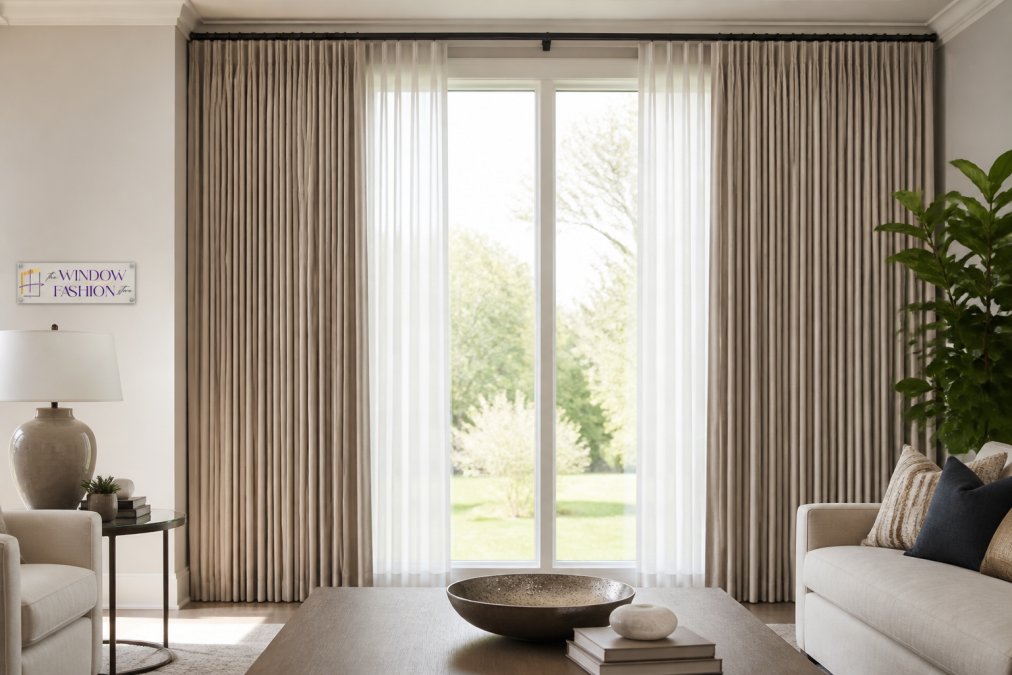
When measuring for custom treatments, always account for the stack-back space if you plan to open the drapes fully. A common mistake is ordering panels that are too narrow, which blocks light even when the curtains are pulled open.
How Custom Window Treatments Enhance Energy Efficiency
Energy efficiency is where custom window treatments quietly pay for themselves over time. Windows are a primary source of heat loss in winter and heat gain in summer, and the right coverings act as a barrier against both. But the financial and comfort benefits only materialize when the treatment is engineered for your specific window and climate zone.
The mechanism behind the savings is straightforward. In winter, warm indoor air collides with the cold glass surface and drops, creating a draft. In summer, radiant heat from the sun passes through the glass and warms the room, forcing your HVAC system to work harder. A custom treatment interrupts both paths.
The physics of the seal
The key difference from ready-made options is the seal. A custom treatment fits snugly within the window frame or extends properly beyond it, preventing the air circulation that undermines cheaper products. Ready-made blinds that are too narrow or too short leave a gap at the edges where convection currents form. That gap is not just a light leak, it is a thermal bypass that carries heat away from the glass in winter and pulls radiant heat into the room in summer.
Custom treatments also give you control over the mounting depth. Inside-mount installations with a tight fit create a dead-air space between the glass and the treatment, acting as an additional insulating layer. Outside-mount installations with a valance or cornice box seal the top of the treatment, preventing the chimney effect where warm air rises behind the shade and escapes into the room.
Material science matters
Different custom products attack energy loss differently:
- Cellular (honeycomb) shades trap air in their hexagonal pockets. The cell count matters: single-cell shades provide a baseline, but double-cell shades create two layers of trapped air, roughly doubling the insulating value. Triple-cell options exist for extreme climates.
- Drapery with thermal lining adds a dense acrylic or foam backing that blocks radiant heat transfer. The drape’s fullness, how much fabric relative to the window width, determines how much dead air is trapped between the fabric and the glass. A flat, taut panel insulates far less than a full, gathered drape.
- Shutters with closed louvers create a solid barrier. Real wood and composite materials have naturally lower thermal conductivity than aluminum blinds, which conduct heat readily.
- Layered treatments, a cellular shade paired with drapery, create multiple air pockets and give you seasonally adjustable control.
Seasonal strategy
A common pattern among energy-conscious homeowners is to operate treatments differently by season. In summer, light-colored, reflective treatments keep solar heat out. In winter, the same treatments can be opened on south-facing windows during the day to admit passive solar gain, then closed at dusk to trap that heat inside. Custom treatments make this strategy practical because they are easy to operate and cover the window completely when closed.
The payback math
According to the U.S. Department of Energy’s guide on window coverings, window coverings can reduce heat loss through windows by up to 25% in winter, but only when properly installed and fitted to the window. The same guide notes that window coverings can reduce solar heat gain in summer by up to 77% with white, tightly closed blinds, again, only when the fit is correct.
To translate that into dollars: if your home loses 30% of its heating energy through windows, a 25% reduction in that loss cuts your total heating bill by roughly 7.5%. On a $1,200 annual heating bill, that is about $90 per winter, and the summer savings stack on top. Over a 15-year lifespan, those savings accumulate into four figures, which meaningfully offsets the upfront cost difference between custom and ready-made.
For maximum efficiency, pair your custom treatments with weatherstripping around the window frame. Even the best treatment cannot compensate for a drafty window sash.
A note on low-E glass
If your windows already have low-emissivity (low-E) coatings, you might wonder whether treatments still matter. They do, but the strategy shifts. Low-E glass already reflects a portion of solar heat, so your treatment’s job becomes insulation and light control rather than primary heat rejection. A custom cellular shade still adds an R-value layer that low-E glass alone cannot provide.
Custom vs Ready-Made Blinds: What Actually Changes
When comparing custom vs ready-made blinds, the differences show up in three areas: materials, hardware, and longevity. Ready-made blinds often use lighter materials to keep costs down, which means they warp, fade, or break under regular use. Custom blinds from quality manufacturers use durable components, including stronger cords, sturdier valances, and wood or composite materials that resist moisture and warping.
The hardware matters more than most people realize. The continuous cord loops and tilt mechanisms on cheap blinds are the first things to fail. Custom options typically include upgraded hardware designed for daily operation over years, not months. This is why homeowners who invest in custom treatments often find they are replacing the cheap blinds every few years, while custom ones remain functional and attractive for a decade or more.
| Comparison Point | Ready-Made Blinds | Custom Window Treatments |
|---|---|---|
| Fit | Standard sizes, visible gaps | Measured to the millimeter |
| Materials | Lightweight, prone to warping | Durable, moisture-resistant components |
| Hardware | Basic, fails quickly | Upgraded for daily long-term use |
| Light Control | Gaps at edges | Full coverage, no light bleed |
| Lifespan | Often replaced within a few years | Built to last for many years |
How to Choose Window Treatments That Fit Your Home
Choosing the right window treatments starts with understanding your priorities. Is the room a bedroom where blackout lining matters most? A living space where natural light and room ambiance take priority? An office where glare on screens is the enemy?
A practical approach is to categorize your windows by function before you look at style. Privacy solutions are non-negotiable for bathrooms and street-facing bedrooms. Light filtering suits living areas where you want soft daylight without harsh UV rays. Blackout lining belongs in media rooms and nurseries. For homes with motorization in mind, consider how you will control the shades daily, since smart home integration changes the hardware requirements. Our Window Treatment Design process helps you work through these decisions, and our Design Gallery lets you see full-sized displays of every product we sell, so you can test fabrics, colors, and functionality before you commit.
Match the treatment to the room’s primary job first, then the aesthetic. A beautiful shade that fails on light control will disappoint you every single day.
Why Professional Window Treatment Installation Matters
Professional installation is the difference between a window treatment that looks good and one that performs flawlessly. Even the finest custom blinds will fail if mounted incorrectly, and the precision of the measurement phase determines everything that follows.
A professional installer brings experience with window architecture, from drywall returns to casings that are not perfectly square. They know where to mount brackets for optimal light control and how to ensure the treatment hangs level. For motorized options, proper installation includes testing the power supply and programming the limits correctly. The Window Covering Association of America’s resources on professional installation emphasizes that correct installation is critical to the performance and safety of window coverings.
The most common installation mistake is assuming the window frame is perfectly square. Older homes rarely have true right angles, and a level installation on an unlevel window requires shimming and adjustment that only experience delivers.
Design Freedom, Smart Home Integration, and Long-Term Value
This is where custom window treatments separate themselves from the commodity market. Design freedom means every element is your choice: fabric, color, pattern, trim, and operating system. You can match the exact undertones of your wall paint or introduce a contrasting texture that elevates the room. Custom drapery can be tailored to the ceiling height, visually expanding the room, while exterior shutters can be built to complement your home’s architectural period. Our custom shutters and custom shades collections showcase the range of possibilities.
But the most significant evolution in this category is not visual, it is operational. Motorization and smart home integration have moved from luxury to expectation for many homeowners, and custom treatments are the only reliable path to a fully automated window system. Our Motorized Blinds & Shades options bring this convenience to any room.
How motorized custom treatments actually work
A motorized shade system consists of four components: the motor (either inside the roller tube or mounted to the headrail), a power source (low-voltage wiring, battery pack, or a rechargeable lithium-ion battery), a control interface (wall switch, remote, or app), and the shade itself. Custom manufacturers build the motor into the product at the factory, which means the mechanism is hidden, the sizing is exact, and the operation is quiet.
Battery-powered options have improved dramatically. Modern rechargeable motors can run for months on a single charge, and some systems use a low-profile battery wand that sits discreetly behind the valance. Hardwired options remain the most reliable for large or heavy treatments, and they are best planned during new construction or a renovation.
Integration scenarios that add real value
- Morning routine: Shades programmed to open gradually in the bedroom at your wake-up time, letting natural light ease you into the day instead of a harsh alarm.
- UV protection: South- and west-facing shades close automatically during peak sun hours to protect hardwood floors, upholstery, and artwork from fading, without you having to remember.
- Energy optimization: Shades close on hot summer afternoons before you arrive home, keeping the house cooler and reducing air conditioning load.
- Vacation mode: Shades open and close on a randomized schedule while you are away, making the home look occupied and deterring would-be burglars.
- Hard-to-reach windows: Skylights, transoms, and tall stairwell windows become practical to operate when a wall switch or voice command replaces a ladder.
These systems integrate with Amazon Alexa, Google Assistant, and Apple HomeKit, as well as platforms like Control4 and Savant. The custom manufacturer provides the necessary hub or bridge, and your installer programs the limits and favorite positions during setup.
The sustainability angle competitors overlook
Most discussions of custom window treatments stop at aesthetics and energy savings. But there is a third dimension that matters to modern homeowners: the environmental footprint of the products themselves.
Ready-made blinds are frequently manufactured overseas with a short lifespan in mind. When they warp, break, or go out of style, they end up in landfills. Custom treatments, by contrast, are built to last for many years, which means fewer replacements and less waste over time.
Beyond longevity, many custom manufacturers now offer eco-conscious material options:
- Sustainable woods: Bamboo shades and shutters, as well as woods certified by the Forest Stewardship Council (FSC), come from responsibly managed forests.
- Recycled content: Some cellular shade fabrics are manufactured using recycled polyester fibers.
- Low-VOC materials: Custom products can be specified with water-based finishes and adhesives that do not off-gas volatile organic compounds, improving indoor air quality, a real consideration for nurseries and homes with chemical sensitivities.
- Natural fibers: Woven wood shades made from jute, reeds, and grasses are renewable and biodegradable at the end of their long life.
When you choose a custom treatment that lasts two decades, you are not just buying a window covering, you are choosing not to send a dozen cheap blinds to the landfill.
Protecting your investment
The financial argument for custom also strengthens over time. Energy savings from proper insulation, reduced fading of furniture and flooring, and the simple fact that you will not replace them in five years all contribute to a favorable cost-benefit analysis. As noted in research on the impact of window treatments on real estate, well-chosen window coverings are among the interior features that add curb appeal and perceived home value. When you factor in the lifespan, custom treatments are a long-term investment, not an expense.
The smartest custom window treatment purchase considers three horizons: how it looks today, how it performs every day, and how it holds up, both physically and environmentally, over time.
Conclusion: Invest in Window Treatments Built to Last
The choice between custom and ready-made window treatments comes down to how you value your time, your comfort, and your home. Ready-made offers immediate gratification but often delivers compromised fit, shorter lifespan, and the hassle of reordering. Custom window treatments provide precise measurements, superior materials, and a tailored look that enhances every room they touch.
At The Window Fashion Store, we make this process straightforward. Our Design Gallery displays full-sized products from Hunter Douglas, Alta Window Fashions, Norman, and Texton, so you can see fabrics, colors, and functionality before you commit. We handle exact measurements and professional installation, ensuring your treatments are built to last. Schedule a free consultation to explore your options and see the difference that 20 years of experience makes.
Frequently Asked Questions
Are custom window treatments worth the investment?
Yes, for most homeowners. Custom window treatments are built to your window’s exact dimensions, eliminating light gaps and drafts that plague ready-made blinds. They also use higher-grade materials, which means they operate smoothly for years rather than wearing out in a few seasons. When you factor in energy savings and the fact that you will not replace them as often, the upfront cost often balances out over the life of the product.
How do custom window treatments improve energy efficiency?
Custom treatments fit your window frame precisely, leaving no gaps for air to escape or enter. Adding insulating fabrics or blackout lining creates a thermal barrier that keeps rooms warmer in winter and cooler in summer. This reduces the workload on your HVAC system, which can lower monthly energy bills. Properly fitted cellular shades or drapery with thermal backing provide the most noticeable difference in rooms with older windows or large glass areas.
Can custom window treatments fit non-standard window shapes?
Yes. This is one of the strongest reasons to choose custom. Arched windows, bay windows, sliding glass doors, and unusually tall or wide openings all require treatments that are not available in standard sizes. A professional measurer records the exact dimensions and any quirks of your window architecture. The treatment is then fabricated to those specs, so you get full coverage and a clean, tailored look without awkward gaps or uneven edges.
Why is professional installation important for custom window treatments?
Professional installation ensures your investment performs as designed. Mounting hardware must be secured correctly for the weight of the treatment, especially for motorized shades or heavy drapery. Installers also know how to handle tricky situations like high ceilings, crown molding, or plaster walls without damaging them. A poor DIY installation can void the warranty or cause the product to sag, bind, or operate unevenly, which defeats the purpose of going custom in the first place.
Ready to transform your windows? Schedule your free consultation with The Window Fashion Store and let our design team bring your vision to life.