


Table of Contents
- Why In-Home Design Consultations Matter for Window Treatments
- How to Choose Window Coverings That Fit Your Space and Style
- What to Expect During a Window Treatment Consultation
- Professional Window Measurement and Precision Installation
- Viewing Window Treatment Samples at Home
- How to Prepare for Your In-Home Consultation
- Design Expertise That Saves Time and Prevents Costly Mistakes
- Frequently Asked Questions
Last Updated: October 16, 2026
Why In-Home Design Consultations Matter for Window Treatments
Choosing window treatments affects how your rooms look, how much light filters in, and how much privacy you get. The wrong choice isn’t just an aesthetic miss, it can leave light leaks, mismatched fabrics, or solutions that don’t fit your windows.
In-home design consultations bring professional expertise directly to you. At The Window Fashion Store, we’ve spent over 20 years helping homeowners and business owners select window treatments that genuinely work for their spaces. An in-home design consultation isn’t just about picking blinds or shades, it’s about understanding your lifestyle, light needs, décor vision, and functional requirements at once.
The real value of in-home design consultations is mistake prevention. Rather than ordering online from photos and guessing at measurements, you get a trained professional who assesses your windows, layout, furnishings, and daily needs, turning a frustrating purchase into a confident decision.
How to Choose Window Coverings That Fit Your Space and Style
Choosing the right window coverings means balancing form and function: complementing your interior design while delivering the light control, privacy, energy efficiency, or easy operation you actually need.
Start by identifying what matters most in each space. A bedroom may need blackout; a living room may need light filtering with privacy; an office may need a cohesive, professional look. Different rooms have different priorities, and the best window coverings align with them.
During an in-home design consultation, a professional narrows the overwhelming number of options to curated selections that fit your space. You examine fabrics in your actual lighting, understand how mechanisms work for your window sizes, and see how each choice integrates with your décor.
Material selection matters more than many homeowners realize. Sheers diffuse light but offer limited privacy; heavier fabrics provide privacy and light control but may feel formal; cellular shades insulate well; shutters deliver a timeless look with precise light control.
Color and pattern selection should feel intentional. Bringing sample books into your home lets you see how colors and textures interact with your walls, furniture, and natural light throughout the day. What looks sophisticated in a showroom might overwhelm your actual space, or vice versa, and this real-world assessment prevents the regret of online-only purchases.
What to Expect During a Window Treatment Consultation
Most articles about in-home design consultations stay at the level of “the designer listens and makes recommendations.” Here is the actual sequence we follow, step by step, so you know exactly what you are booking.
Step 1: A short walkthrough (about 10 to 15 minutes). Your consultant starts by walking the rooms you want to address, in the order you use them during a normal day. Morning rooms first, evening rooms last, is a common pattern because it surfaces how light changes across the home.
Step 2: A needs conversation (about 15 to 20 minutes). The consultant asks about lifestyle rather than style: who uses the room, at what hours, whether anyone naps or works from home, whether pets or young children are present, and what bothers you about the current coverings.
Step 3: Window assessment and rough measurement (about 15 minutes). The consultant examines each window’s frame, depth, and squareness, checks whether inside or outside mount is viable, and records approximate dimensions, enough to rule out options that won’t fit or operate cleanly. Final measurement happens after you select a product.
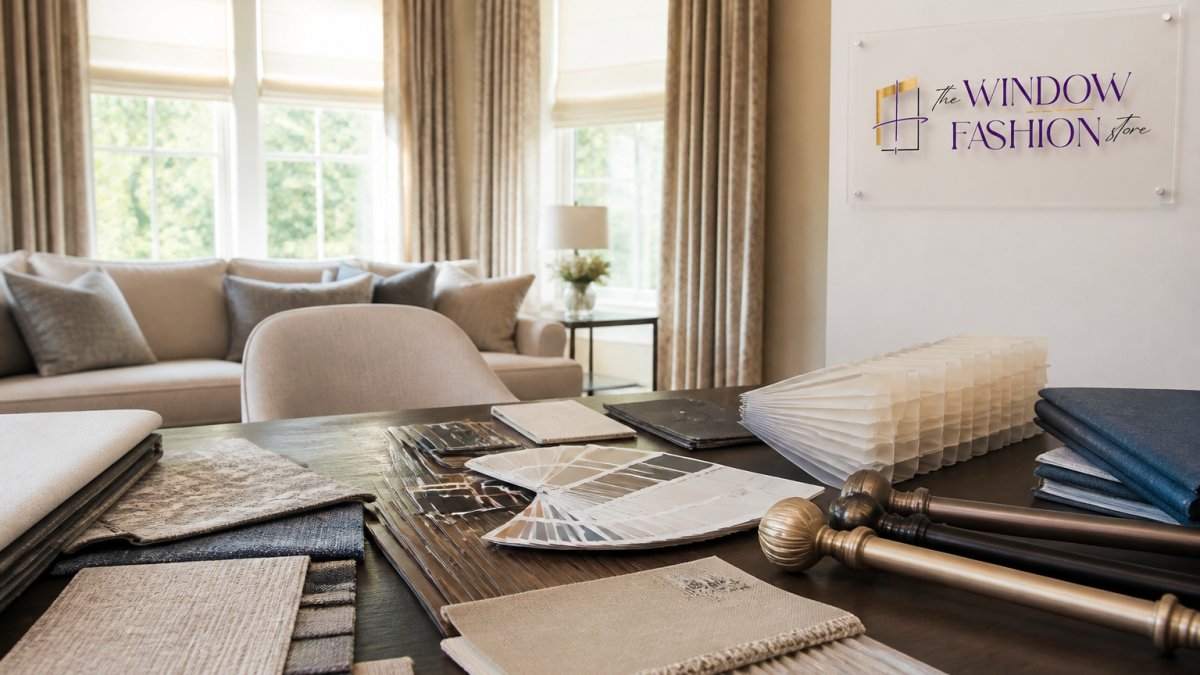
Step 4: Sample review in your own light (about 20 to 30 minutes). Small sample books come out, and the consultant holds fabrics and finishes against your walls, furniture, and window frames.
Step 5: A written recommendation and next steps (about 10 minutes). Before leaving, the consultant summarizes recommended products room by room, notes what you liked and ruled out, and explains next steps. You receive a written proposal with product specifications and final pricing after exact measurements are confirmed.
A typical in-home consultation runs about 60 to 90 minutes for a single room and closer to two hours for a whole-home project. If you want to see the full range of products, functions, fabrics, and colors before the visit, visit our Design Gallery, it has full-sized displays of every Hunter Douglas, Alta Window Fashions, Norman, and Texton product we sell, so you can compare mechanisms and materials in person and then narrow the final decision at home with sample books.
Ask your consultant to leave the sample books with you for a day or two if you are undecided. Seeing a fabric in morning light, afternoon light, and lamplight often settles the choice faster than a second appointment.
Professional Window Measurement and Precision Installation
Accurate measurements are the foundation of custom window treatments that fit and function properly, the difference between a DIY approach and a result that looks intentional and performs reliably.
Small measurement errors compound: a quarter-inch mistake across multiple windows means visible gaps, uneven coverage, or mechanisms that don’t operate smoothly. Professional measurement accounts for window irregularities, how treatments hang when fully extended, and the installation method your chosen treatment requires.
The Window Fashion Store’s measurement process goes beyond simple dimensions. Our team evaluates window frames, assesses mounting space, checks for obstacles or architectural features, and confirms exact specifications for your chosen treatment, so your custom window treatments install correctly the first time.
Professional installation is equally critical. Proper installation means treatments operate smoothly, hang evenly, and deliver the light control and privacy you selected, and it extends their lifespan by preventing the operational issues that follow improper setup.
Viewing Window Treatment Samples at Home
One of the most underrated benefits of an in-home design consultation is viewing actual samples in your space before committing, eliminating much of the guesswork that makes online shopping stressful. This tactile evaluation process extends naturally to specialized environments, ensuring that every detail aligns with your vision during a pet house design consultation.
Showroom lighting is controlled and consistent; your home’s lighting changes throughout the day and varies by room. A fabric that looks sophisticated in the showroom might appear washed out in your bedroom or too heavy in your bright kitchen, and something underwhelming in the store might look perfect in context with your décor and natural light.
When your consultant brings sample books to your home, you evaluate options in the exact conditions you’ll live with daily. You see how colors interact with your walls and furniture, hold samples up to your windows to see how they frame your view, feel the material quality, and imagine them fully installed rather than as a small swatch.
This tangible evaluation builds confidence. Rather than second-guessing after delivery, you know you’ve chosen something that genuinely works in your space, worth far more than the convenience of ordering sight-unseen online.
How to Prepare for Your In-Home Consultation
**1.
2. Note how each room is used and when. Jot down who uses the room, at what hours, and whether anyone works, naps, or entertains there. Also note pets, young children, and any mobility considerations that affect cord style or operation.
3. Gather two or three inspiration images. Pull images from design magazines, saved social posts, or photos of friends’ homes.
4. Take photos of each window from two angles. One straight-on shot and one from across the room, taken during the day with current coverings open. These orient the consultant to your layout and give you a reference point when reviewing the proposal.
5. Record rough dimensions and window orientation. Precision isn’t needed, the consultant measures exactly, but approximate width and height plus which direction each window faces helps them bring the right sample books and anticipate heat gain or glare.
6. Set a working budget range. You don’t need to share it, but knowing your own range keeps the conversation focused on products that fit it.
7. Clear the window areas. Remove clutter, temporary coverings, and furniture that blocks access to the windows. This is a five-minute task that makes the assessment faster and more accurate, and it lets the consultant demonstrate operation without working around obstacles.
8. Decide who needs to be present. For households with more than one decision-maker, having everyone in the room for the sample review prevents the “I need to check with my partner” delay that pushes projects back by weeks.
If you do only one thing before the appointment, write down the specific problem each room needs to solve. Everything else on this list supports that single sentence, and it is the item consultants say most often separates a productive visit from a meandering one.
If you would rather see the full product range in person before the home visit, stop by our Design Gallery first. Full-sized displays of every Hunter Douglas, Alta Window Fashions, Norman, and Texton product we sell let you compare functions, fabrics, and colors side by side, and the in-home consultation then becomes a focused conversation about which of those options fits your specific windows and rooms.
Design Expertise That Saves Time and Prevents Costly Mistakes
The primary value of professional design expertise lies in what it prevents. Window treatment mistakes are expensive, not just in product cost, but in wasted time, the frustration of living with something that doesn’t work, and the hassle of replacing it.
Common mistakes include treatments that don’t fit properly, fabrics that don’t suit your lifestyle (like high-maintenance materials in high-traffic areas), styles that clash with your décor, or underestimating how much light control you need. These aren’t small issues, you live with them every day until you replace the treatments.
A professional designer catches these issues before they happen. They know how treatments behave in different conditions, which fabrics hold up under heavy use, and when a trendy choice will clash with your home’s design direction. They ask the questions that surface your actual priorities rather than your initial assumptions.
The time savings are equally valuable. Instead of weeks researching, comparing products, reading reviews, and second-guessing, expert guidance narrows your choices to genuinely viable options. The whole process, research, consultation, decision, and installation, typically takes a few hours, versus the weeks or months many homeowners spend deciding alone.
Beyond preventing mistakes, professional expertise surfaces opportunities you wouldn’t have considered, a solution that solves multiple problems at once, a style that works better than your original idea, or a functional benefit you hadn’t thought about. These insights often become what homeowners appreciate most about their window treatments.
An in-home design consultation transforms window treatment selection from a stressful, uncertain process into a confident decision backed by professional expertise. The Window Fashion Store brings 20+ years of experience directly to your home, assessing your needs, showing curated options in your actual space, and helping you choose treatments that genuinely enhance your home. Schedule a free consultation today and see how professional design guidance makes a difference.
Frequently Asked Questions
What happens during an in-home design consultation for window treatments?
A designer visits your home to assess your windows, lighting, room layout, and personal style. They discuss your project goals, show you fabric and color options, take precise measurements, and create a design plan tailored to your space. You’ll see samples in your actual room with your real lighting, helping you make confident decisions about materials, finishes, and functionality before any purchase.
How do I choose window coverings that work for my specific room?
Consider your room’s function, natural light needs, privacy requirements, and décor style. A design consultation helps evaluate these factors. Professionals assess your windows’ size and shape, room layout, and how light changes throughout the day. They recommend solutions that balance aesthetics with practical needs like light control, energy efficiency, and durability, ensuring your selections enhance both form and function.
Why is professional window measurement important for custom blinds?
Accurate measurements ensure custom window treatments fit perfectly, eliminating light gaps and functional issues. Professional installers use specialized techniques to measure odd-sized or shaped windows correctly. Improper measurements lead to poor fit, light leaks, and the need for costly adjustments. Expert measurement combined with professional installation guarantees your custom treatments operate smoothly and look polished for years.
How should I prepare for a window treatment design consultation?
Before your consultation, gather inspiration images, note which rooms need treatments, and think about your priorities (light control, privacy, style). Clean windows and clear sills so the designer can access them easily. Have measurements of your windows available if possible. Discuss your budget and timeline. Prepare a list of questions about durability, maintenance, and functionality. This preparation helps the designer understand your vision and deliver recommendations that match your needs.