


Table of Contents
- Why Professional Shutter Installation Pays Off
- Precise Measurements and a Custom Fit
- The Shutter Installation Process, Step by Step
- Light Control, Privacy, and Everyday Comfort
- What Professional Plantation Shutter Installation Includes
- Choosing Shutters for Your Home: Materials and Styles
- What a Shutter Design Consultation Covers
- Conclusion
- Frequently Asked Questions
Last Updated: October 21, 2026
Why Professional Shutter Installation Pays Off
Shutter installation is the step that decides whether custom shutters look built-in or bolted-on. At The Window Fashion Store, we have spent more than 20 years fitting window treatments into homes and commercial spaces, and the pattern is consistent: the panels are only as good as the measurements and mounting behind them. A shutter that is a few millimeters off shows a light gap at the frame, binds when you tilt the louvers, and never sits flush.
That is the case for hiring a professional rather than treating shutters as a weekend project. Custom shutters are a semi-permanent fixture, mounted into the window frame and expected to last for years. Get the fit right once and everything downstream, from light control to privacy to resale appeal, works the way it should. Get it wrong and you live with the consequences every morning.
Below, we break down what professional shutter installation actually delivers, what the process looks like, and where DIY tends to fall short.
Precise Measurements and a Custom Fit
Professional shutter installation starts with measurement, not with a drill. An installer measures each window opening at multiple points, checks for out-of-square frames, and notes the depth available for the panel and frame. Those numbers determine the mounting style and panel size.
This matters because windows are rarely perfectly square, especially in older homes. A frame that is off by a small amount at one corner will not accept a stock-sized panel cleanly. Custom fit means the shutter is built to the opening, so the louvers clear the frame and the panel closes without rubbing.
Handling Odd Shapes and Hard-to-Reach Windows
Arched, angled, and oversized windows are where measurement skill earns its keep. So are windows above stairwells, behind furniture, or set high in a two-story room. An experienced installer knows how to template a non-rectangular opening and how to work safely at height without damaging trim or drywall.
If your master bedroom has the kind of odd-size windows that leave light gaps with off-the-shelf coverings, this is the part of the process that solves it.
The Shutter Installation Process, Step by Step
Most shutter installations follow a predictable sequence, and knowing it helps you judge a quote. Here is what a professional job actually involves, what can go wrong at each stage, and how it compares with doing it yourself.
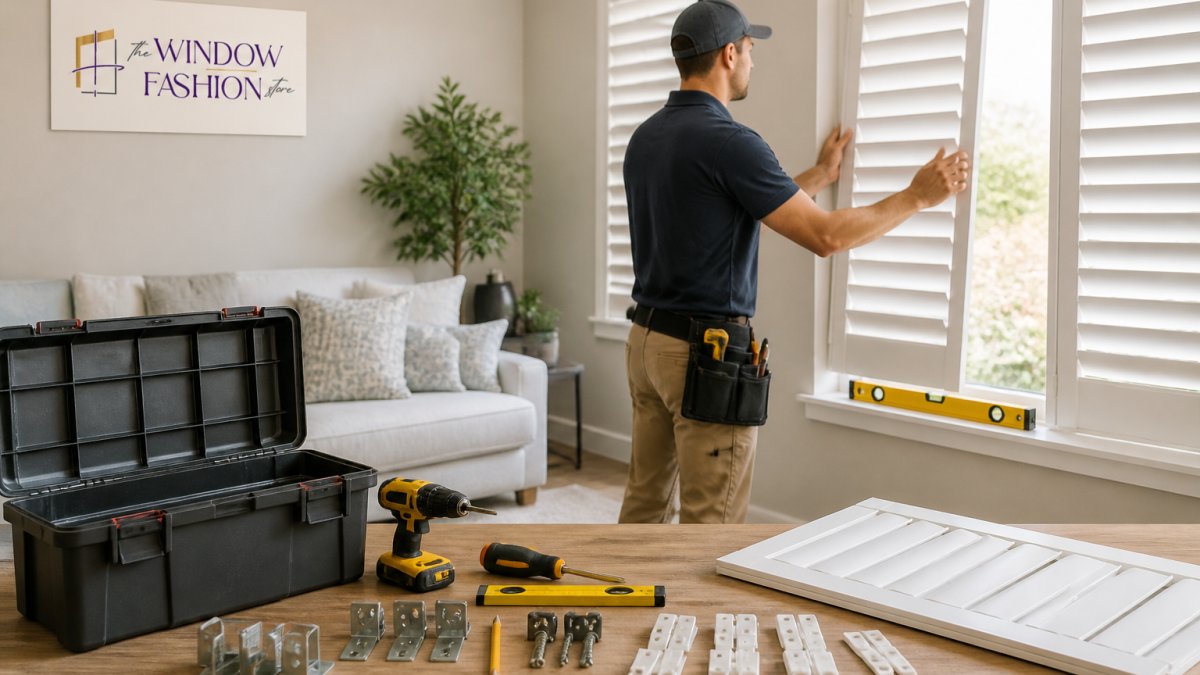
- Confirm the order and inspect the panels. Sizes, finish, hinge side, tilt-rod placement, and hardware are checked against the original measurements before anything touches the wall. Catching a mis-specified panel here is a phone call; catching it after mounting is a reorder.
- Prep the window frame. The opening is cleaned, the mounting surface is checked for soundness, and any protruding hardware or uneven drywall is addressed. On older windows, this is where installers discover the frame is out of square or the drywall return is too shallow for the intended frame.
- Set the frame or mounting brackets. The frame is leveled and shimmed so it sits square in the opening. This is the step that separates a built-in look from a bolted-on one: a frame that is off level by even a small amount shows as a light gap at one corner and as binding louvers at the other.
- Hang the panels. Each panel is fitted, alignment is checked, and hinges are adjusted so the shutter opens and closes smoothly and sits flush when closed.
- Test the louvers and operability. The louvers are tilted through their full range, and the installer confirms nothing rubs the frame, the tilt rod moves freely, and the panels clear any window hardware or trim.
- Clean up and walk through. The installer reviews operation with the homeowner, notes any adjustments, and explains how to tilt, clean, and care for the shutters.
A typical in-home installation for a standard room takes a few hours; larger jobs, arched openings, and two-story windows take longer because of templating and safe access. The exact time depends on the number of openings, the mounting style, and the condition of the frames.
How Professional Installation Compares With DIY
DIY shutter installation is possible, and some homeowners do it well. The trade-offs are worth stating plainly:
- Measurement accuracy. A professional measures each opening at multiple points and accounts for out-of-square frames. A single measurement taken at the center of the window is the most common source of a poor fit.
- Tools. Level, shims, drill, bits suited to the frame material, and a stud finder are the minimum. Arched and oversized openings may need templating materials and safe access equipment.
- Fit and finish. Level mounting and correct shim placement are what keep louvers from binding and panels from showing light gaps. These are skill steps, not product steps.
- Risk of damage. Drilling into the wrong part of a frame, over-tightening a screw, or misjudging window depth can damage trim, drywall, or the shutter itself. Repairs add time and cost that a professional install avoids.
- Warranty and accountability. When the same team measures, supplies, and installs, there is one point of accountability if a panel needs adjustment. Split responsibilities between a retailer and a separate installer make that harder to resolve.
If you are weighing DIY against professional installation, the honest answer is that the product is only as good as the measurements and mounting behind it. A design consultation is the low-risk way to find out which approach suits your windows.
Light Control, Privacy, and Everyday Comfort
Adjustable louvers are the reason shutters outperform most other window treatments on day-to-day control. Tilt them partway and you cut glare while keeping natural light in the room. Close them fully and you get privacy without closing a curtain.
That combination matters in rooms you use at all hours. A home office that faces the afternoon sun can be dialed down without going dark. A bedroom gets privacy at night and soft light in the morning. Shutters also add a layer of insulation at the window, which helps with heat gain in summer and drafts in winter.
Tilt louvers upward rather than downward during the day. You block direct sun from hitting the room while still bouncing daylight off the ceiling, which keeps the space brighter than a fully closed position.
What Professional Plantation Shutter Installation Includes
Professional plantation shutter installation covers more than hanging panels. It is a scope of work, and knowing what belongs in it helps you compare quotes and ask better questions.
Measurement visit. An installer measures each opening at multiple points, checks for out-of-square frames, and notes the depth available for the panel and frame. Those numbers determine the mounting style and panel size.
Mounting plan. The installer decides whether the shutter mounts inside the window frame, outside it, or into the surrounding wall, based on window depth, trim, and how the shutter needs to operate. This decision affects light gaps, clearance for the louvers, and how the finished shutter looks against the trim.
Fitting and alignment. The frame is leveled and shimmed, panels are hung, and hinges are adjusted so the shutter opens and closes smoothly and sits flush when closed.
Operability check. The louvers are tilted through their full range, and the installer confirms nothing binds, the tilt rod moves freely, and the panels clear any window hardware.
Walkthrough and aftercare. The installer reviews operation with the homeowner and explains how to tilt, clean, and care for the shutters.
Fit, Alignment, and Operating Performance
Precise measurements and level mounting are what keep louvers from binding and panels from showing light gaps. A shutter that is slightly out of level will rub at one corner, and a frame that is not square will leave a gap that no amount of tilting fixes. These are workmanship issues, not product issues, which is why the installation step matters as much as the shutter itself.
Warranties and Aftercare
After installation, shutters need little maintenance: dust regularly, wipe with a damp cloth, and avoid abrasive cleaners on the finish (Expert Product Care Tips).
We install and service only the products we sell directly, including lines from Hunter Douglas, Alta Window Fashions, Norman, and Texton. That focus is deliberate. When the same team measures, supplies, and installs, there is one point of accountability if a panel needs adjustment. You are not caught between a retailer and a separate installer.
If you want to see the products and finishes in person before deciding, our Design Gallery has full-sized displays of every product line we carry.
Choosing Shutters for Your Home: Materials and Styles
Material choice drives how a shutter looks, how it handles moisture, and how much maintenance it needs. Style comes down to louver size and frame profile. Wider louvers give a cleaner view; narrower louvers offer finer light control. A design consultation is the fastest way to compare swatches and samples side by side.
What a Shutter Design Consultation Covers
A shutter design consultation is a working session, not a sales pitch. It covers which rooms need which material, how much light control each window needs, and how the shutter style fits the room’s existing trim and decor.
We offer two formats. You can visit our showroom and see full-sized displays of every product, fabric, and color we carry. Or we bring small sample books to your home, which helps when you want to judge a finish against your actual paint, flooring, and light. Either way, the goal is the same: pick the right shutter for the room before anyone measures.
The consultation is where odd window shapes, privacy needs, and material choices get resolved. Doing it before measurement prevents costly changes later in the order.
Conclusion
The gap between shutters that feel built-in and shutters that feel like an afterthought usually comes down to measurement and mounting, not the product itself. That is the practical case for professional shutter installation: a custom fit, correct alignment, and panels that operate smoothly for years.
If you are weighing options for your home or a commercial space, start with a conversation. The Window Fashion Store offers free design consultations, in-home sample books, and full-sized displays in our gallery, backed by more than 20 years of experience and an A+ rating with the Better Business Bureau. Schedule your free consultation and we will help you choose shutters that fit your windows and your rooms.
Frequently Asked Questions
What are the benefits of professional shutter installation?
Professional shutter installation delivers a precise fit that factory-made panels rarely achieve on their own. Installers measure each window opening, account for trim and drywall depth, and mount the frame so louvers close evenly and light gaps stay small. That translates to better privacy, smoother operation, fewer callbacks, and a finished look that holds up over years of daily use.
Are professionally installed shutters worth it?
For most homeowners, yes. Shutters are a semi-permanent fixture, so a poor fit shows every day in stuck louvers, visible gaps, and sagging panels. Professional installation protects the investment by getting alignment and mounting right the first time.
How long does professional shutter installation take?
Most residential jobs finish in a single visit. A typical room of windows takes a few hours, while a whole-home project with many openings can run into a second day. Custom shutters are built to order after measurements, so expect a lead time between order and install day. Your consultation confirms the timeline before you commit.
How does professional installation help shutters fit properly?
Installers measure inside the window frame at multiple points because openings are rarely perfectly square. They also check sill depth, trim clearance, and how the mounting will sit against the wall. That attention to fit and finish means louvers operate without rubbing, panels sit flush, and the shutter stays aligned as seasons change.