


Table of Contents
- How Window Treatments Reduce Heat and Lower Cooling Costs
- Hunter Douglas Duette Honeycomb Shades: Maximum Thermal Efficiency
- Alta Window Fashions Cellular Shades: Custom Heat-Blocking Design
- Norman Shutters: Permanent Solar Heat Barriers
- Energy Efficient Shades for Homes: Solar Screens and Texton Roller Shades
- Motorized Smart Shades Benefits: Automated Temperature Control
- Blackout Draperies and Thermal Liners: Maximum Light and Heat Blockage
- Comparing Heat-Reduction Window Treatments: Quick Selection Guide
- Frequently Asked Questions
Last Updated: September 18, 2026
How Window Treatments Reduce Heat and Lower Cooling Costs
Heat enters your home through windows in three ways: direct solar radiation, heat transfer through glass, and radiant energy buildup. The right window treatments for heat block one or more of these pathways, reducing your cooling load and lowering energy bills.
Cellular shades trap air in honeycomb structures. Solar screens block UV rays before they enter. Shutters create a solid thermal barrier. Blackout draperies with thermal liners reflect heat away. Each approach has different thermal efficiency, aesthetic appeal, and durability.
The key is matching your window’s orientation, local climate, and daily light needs to the right treatment. A south-facing bedroom needs different protection than a north-facing office. This guide walks you through the best options and how to choose.
Hunter Douglas Duette Honeycomb Shades: Maximum Thermal Efficiency
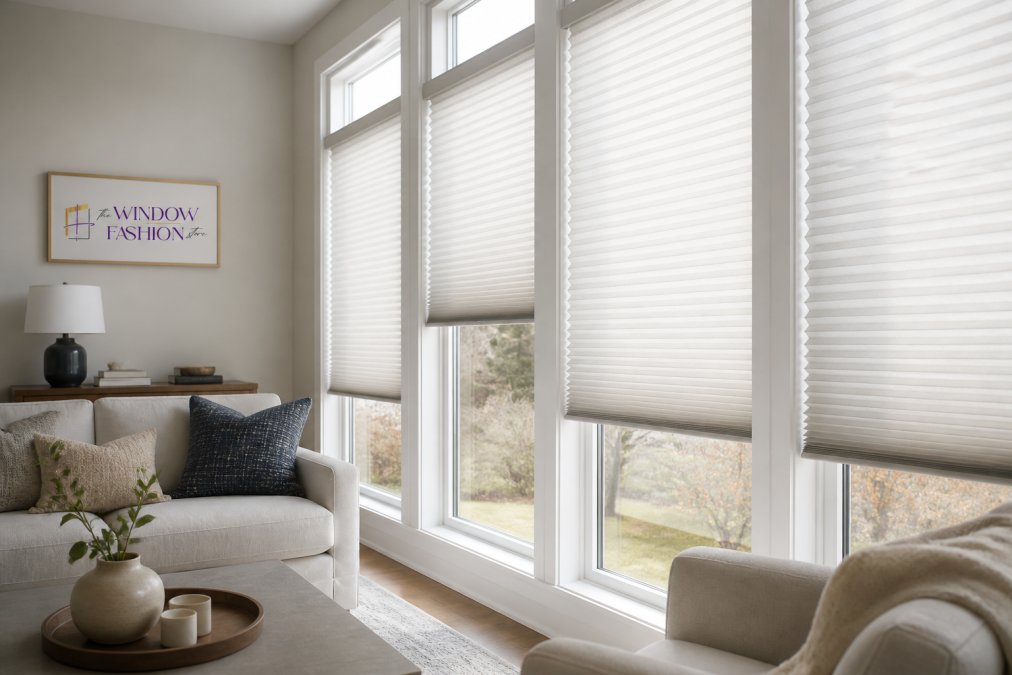
Hunter Douglas Duette shades are engineered with a honeycomb structure that creates insulating air pockets. These pockets slow heat transfer through the window, reducing thermal loss in winter and heat gain in summer. The cellular design also absorbs sound, adding a secondary benefit.
Duette shades come in single-cell and double-cell configurations. Double-cell designs provide superior thermal resistance for extreme climates and are available in light-filtering and blackout fabrics.
The air pockets act as a thermal barrier, forcing heat to travel through multiple fabric and air layers. The white or reflective backing on blackout versions reflects additional solar radiation outward.
Professional installation ensures shades sit flush against the frame, minimizing air leakage. The Window Fashion Store provides exact measurements and professional installation to maximize efficiency.
Double-cell shades perform 20-30% better than single-cell for thermal efficiency, but take up slightly more depth when raised. Measure your window recess before ordering to confirm fit.
Alta Window Fashions Cellular Shades: Custom Heat-Blocking Design
Alta Window Fashions specializes in custom window treatments, shades built to your exact window dimensions, eliminating gaps at edges and sides that cause heat loss and gain.
Alta offers multiple cell sizes and opacity levels. Light-filtering fabrics allow daylight while blocking UV rays; blackout fabrics eliminate light entirely, ideal for bedrooms and media rooms.
Custom shades conform perfectly to unique window sizes and frame depths, creating a true thermal seal, especially important for oddly-shaped or non-standard windows.
Alta shades integrate with motorized blinds and shades for automated scheduling, closing during peak heat hours and opening during cooler mornings to optimize temperature without manual adjustment.
Homes with non-standard window sizes, rooms with extreme sun exposure, and homeowners wanting seamless thermal performance across multiple windows.
Norman Shutters: Permanent Solar Heat Barriers
Norman shutters block direct sunlight entirely, creating a physical barrier that is exceptionally effective at preventing heat buildup.
When sunlight strikes closed shutters, the solid material absorbs and reflects energy away from the window glass, preventing heat from entering the room.
Adjustable louvers provide maximum heat blocking when closed, or allow ventilation and light while reducing heat when partially open.
Shutters are a permanent installation that adds structural value, complements most architectural styles, and requires minimal maintenance.
Shutters reduce the outside view when closed. For homeowners prioritizing heat reduction and durability over flexibility, shutters deliver.
Energy Efficient Shades for Homes: Solar Screens and Texton Roller Shades
Solar screens block infrared radiation and UV rays while allowing outside views, ideal for rooms where daylight and views matter but heat control is needed.
Solar screens use open-weave construction that reflects and absorbs infrared energy. Lower openness factors block more heat but reduce visibility; higher openness preserves views but reduces thermal performance.
Texton roller shades use solar-control fabrics that minimize heat transfer while maintaining a clean aesthetic, ideal for contemporary homes and offices.
Solar screens and roller shades reduce cooling load while preserving natural light and views, a practical choice for kitchens, living rooms, and offices.
Solar screens and roller shades are best for managing heat while maintaining daylight. Cellular shades and shutters provide superior thermal insulation when blocking light entirely is acceptable.
Motorized Smart Shades Benefits: Automated Temperature Control
Motorized window treatments for heat adjust automatically based on time of day and sun position, delivering consistent thermal performance without depending on user behavior.
How Automated Scheduling Reduces Cooling Load
South-facing windows receive maximum radiation between 10 a.m. and 4 p.m.; west-facing windows peak 3-6 p.m. A motorized system closes shades during these peak hours and opens them during cooler times, preventing heat buildup. Integrating a high-performance window film for heat reduction provides an additional layer of passive thermal regulation that maintains interior comfort even when automated shades remain retracted.
Research from the Department of Energy shows automated shading can reduce cooling energy consumption by 10-25% compared to manual operation. Consistency is key: motorized systems never forget, compounding savings over a cooling season.
Advanced systems integrate with smart thermostats and weather data, opening shades for passive cooling or closing them to reduce air-conditioning demand, responsiveness impossible with manual operation.
Installation Precision Matters for Thermal Performance
Motorized shades only deliver rated thermal efficiency when installed with precision. Gaps around edges, even 1/4 inch, allow warm air to bypass the treatment. Poor installation undermines performance.
Professional installation ensures shades sit flush against the frame, motor wiring is concealed, scheduling is programmed for your latitude, and backup batteries function. The Window Fashion Store provides exact measurements and professional installation, verifying that shades operate smoothly and seal tightly against the frame.
Motorized Options Across Product Lines
Motorized systems are available on Hunter Douglas Duette, Alta custom shades, and Texton roller shades.
Motorized shades deliver maximum energy savings in homes with consistent daily schedules. If you work from home or have irregular occupancy, manual shades with a simple closing routine may be sufficient. Discuss your daily patterns during a design consultation to determine if automation is the right investment.
Smart Home Integration and Voice Control
Blackout Draperies and Thermal Liners: Maximum Light and Heat Blockage
Blackout draperies with thermal liners combine decorative outer fabric with white or metallic thermal lining that reflects solar radiation outward, creating a powerful heat barrier.
Comparing Heat-Reduction Window Treatments: Quick Selection Guide
Window Orientation Changes Everything
South-Facing Windows: Maximum Heat Blocking Required
- Hunter Douglas Duette Double-Cell Shades (blackout): Excellent thermal resistance with reflective backing. Ideal for living rooms and bedrooms.
- Norman Shutters: Solid barrier blocks all direct radiation; adjustable louvers allow ventilation. Best for permanent installations.
- Blackout Draperies with Thermal Liners: Reflective backing and heavy fabric create a powerful barrier with aesthetic flexibility.
West-Facing Windows: Afternoon Heat Peak
- Alta Custom Cellular Shades: Precision fit eliminates edge gaps; motorized scheduling closes shades at 2 p.m. to intercept heat.
- Solar Screens: Allow views and daylight while filtering infrared radiation. Ideal for kitchens and living rooms.
- Texton Motorized Roller Shades: Sleek design with motorized scheduling for peak afternoon hours.
North-Facing Windows: Light-Filtering Priority
- Light-Filtering Cellular Shades: Maintain daylight and views while reducing glare.
- Solar Screens: Preserve views and natural light while reducing glare and UV fading.
East-Facing Windows: Morning Sun Management
- Light-Filtering Cellular Shades: Allow morning light while reducing heat; open by mid-morning when sun moves west.
- Motorized Shades with Scheduling: Program to close at sunrise on hot days and open by 9 a.m. for morning light.
General Comparison Table
| Treatment Type | Heat-Blocking Strength | Light Control | Best Window Orientation | Installation Complexity | Best For |
|---|---|---|---|---|---|
| Cellular Shades (Double-Cell, Blackout) | Excellent | Full blockage | South, West | Professional | Aggressive heat control; thermal priority |
| Norman Shutters | Excellent | Full blockage when closed | South, West | Professional | Permanent solutions; high durability; long-term investment |
| Solar Screens | Good | Maintains views | East, North, West | Professional | Rooms needing daylight and heat control; views important |
| Texton Roller Shades (Light-Filtering) | Good | Filtered light | East, North | Professional | Modern homes; balanced light and heat management |
| Blackout Draperies with Thermal Liners | Excellent | Full blockage | South, West | Professional | Bedrooms; decorative priority; flexible scheduling |
| Motorized Shades (Any Type) | Varies by shade type | Varies by shade type | All orientations | Professional | Automated consistency; peak-hour scheduling; smart home integration |
Room Function and Climate Context
Window orientation is the primary variable. South and west-facing windows need aggressive heat blocking. North and east-facing windows benefit more from light-filtering options. Match your treatment to your window’s exposure, and you’ll maximize both comfort and energy savings.
Schedule a free consultation. Our team assesses your window orientations, measures your frames, and recommends treatments tailored to each wall’s heat-gain profile. We bring sample books so you can see colors and textures in your actual lighting. Professional installation ensures your shades perform at their rated thermal efficiency and seal properly against the frame.
Frequently Asked Questions
What window treatments are most effective at blocking solar heat?
Cellular shades with honeycomb structures trap air in insulating pockets, reducing heat transfer by up to 40%. Solar screens and blackout draperies with thermal backing also perform exceptionally well. The effectiveness depends on fabric opacity, cell depth, and proper fit to your window frame. Professional measurement and installation ensure no light gaps that would compromise heat blocking.
How do motorized smart shades benefits improve energy efficiency?
Motorized shades can be programmed to close automatically during peak sun hours and open during cooler evenings, reducing cooling load without manual adjustment. Smart scheduling based on time of day and season maximizes energy savings. Integration with home automation systems allows remote control and consistency across multiple windows, ensuring comprehensive thermal management throughout your home.
Do cellular shades actually help keep a room cool?
Yes. The honeycomb design creates air pockets that act as thermal barriers, slowing heat transfer through windows. Studies show quality cellular shades can reduce cooling costs by 10-15% when properly installed. Dual-cell designs provide even greater insulation. Results are most noticeable on windows with high sun exposure and in climates with intense summer heat.
What is the difference between blackout and thermal window treatments?
Blackout fabrics block light completely, while thermal treatments specifically reduce heat transfer through window glass. Blackout draperies with white or reflective thermal backing combine both functions, reflecting solar radiation away from your home. Cellular shades provide thermal insulation through air pockets. Many homeowners choose layered approaches using both types for maximum heat reduction and light control.