


Table of Contents
- Custom Blinds vs. Store-Bought: Quick Comparison
- How to Measure Windows for Blinds Accurately
- Material Quality and Durability: What Lasts
- Benefits of Custom Window Treatments
- Professional Blind Installation Services vs. DIY
- Window Treatment Design Consultation: What to Expect
- Cost, Warranty, and Long-Term Value
- Frequently Asked Questions
Last Updated: September 3, 2026
Custom Blinds vs. Store-Bought: Quick Comparison
When updating window treatments, the choice between custom blinds and store-bought comes down to three core tensions: precision of fit, material quality, and long-term value. Store-bought blinds come in standard sizes that work reasonably well for standard windows. Custom blinds are measured and fabricated specifically for your openings, one fits most windows adequately, the other fits your windows perfectly.
At The Window Fashion Store, we’ve worked with homeowners who initially thought store-bought would save money, only to discover light gaps, poor operation, or replacements needed. The real question isn’t whether custom costs more initially, it does, but whether the precision, durability, and performance justify that difference for your specific situation.
| Aspect | Custom Blinds | Store-Bought Blinds |
|---|---|---|
| Fit Quality | Precise measurement; no light gaps | Standard sizes; potential gaps |
| Customization | Unlimited styles, colors, fabrics | Limited to what’s in stock |
| Material Durability | Premium; designed for longevity | Variable; often lighter construction |
| Installation | Professional; included in most cases | DIY or paid installation extra |
| Lead Time | Varies by product and manufacturer | Available immediately |
| Light Control | Engineered for your window | May require adjustments |
| Thermal Performance | Optimized for your frame type | Standard efficiency |
| Warranty | Comprehensive | Limited |
How to Measure Windows for Blinds Accurately
Accurate measurements are the foundation of whether custom blinds will solve your problems or become an expensive mistake. This is where precision matters most.
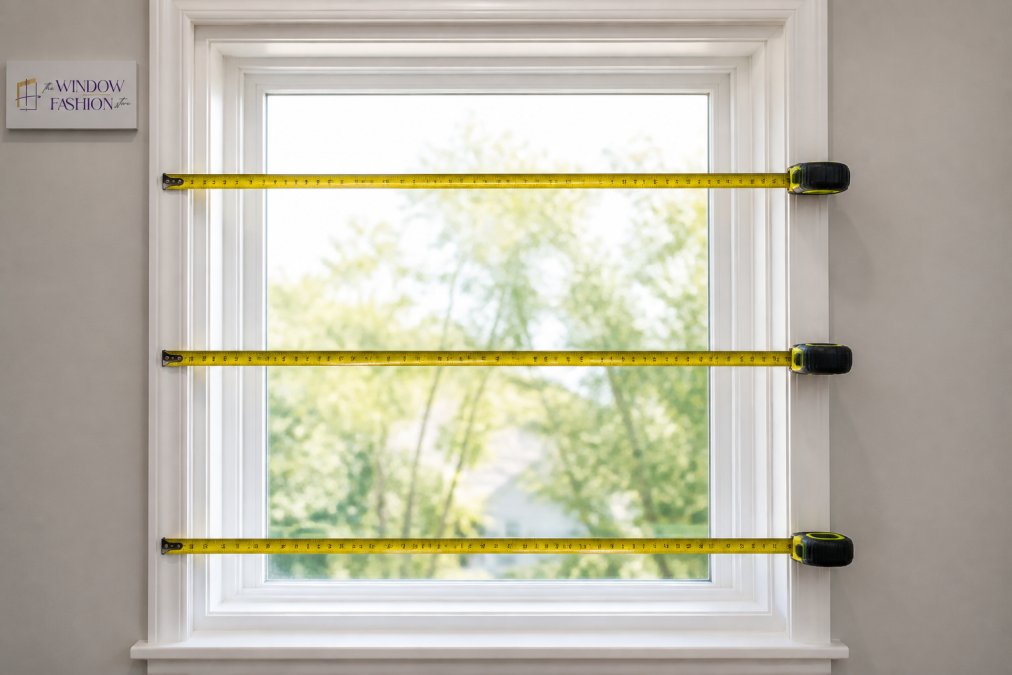
The measurement process requires understanding two critical decisions: inside mount versus outside mount. These aren’t just different installation positions; they fundamentally change how the blinds function.
Inside vs. Outside Mount Measurements
An inside mount means the blinds sit within the window frame itself, creating a clean, integrated look. To measure for inside mount, take three horizontal measurements (top, middle, bottom) and use the smallest as your width. Measure height from the top of the frame to the sill at multiple points to account for variation.
An outside mount extends beyond the window frame onto the wall or trim, working better for odd-shaped windows or when you want to maximize light control. Measure the area where you want the blinds to sit (typically 2-3 inches beyond the frame on each side) and the full height from ceiling or trim to your desired endpoint.
Outside mount also offers flexibility: if your windows are slightly different sizes, one blind treatment can cover everything uniformly.
Handling Odd-Sized and Non-Standard Windows
Non-standard windows, arched tops, angled frames, unusually narrow or wide openings, dormers, cathedral ceilings, are where custom blinds earn their premium. Store-bought solutions either don’t exist or require extensive customization that defeats cost savings.
For an arched window, custom fabrication allows the blind to follow the actual shape of your opening. For windows wider than standard inventory, store-bought may require multiple units with visible seams and operational headaches.
When measuring non-standard windows, document exact dimensions at multiple points. For an arch, measure the width at the base, height to the peak, and measurements at quarter-points along the curve. These details allow a manufacturer to create a treatment that actually fits.
Material Quality and Durability: What Lasts
Store-bought blinds are often lightweight because materials are chosen for cost and quick shipping, not longevity. Custom blinds use heavier fabrics, more substantial hardware, and construction methods designed for years of daily operation.
Slat durability differs significantly. Store-bought vinyl blinds may use thin slats that flex and crack with repeated opening and closing (peer-reviewed research). Premium custom blinds use heavier gauge materials that maintain structural integrity through thousands of cycles.
Hardware is equally important. The lift mechanism, tilt rod, and brackets are where some blinds fail first. Store-bought options may use stamped metal or plastic components. Custom blinds from Hunter Douglas and Alta Window Fashions use precision-engineered hardware designed to outlast the fabric itself.
Fabric quality determines both performance and longevity. A light-filtering fabric in a store-bought roller shade might be thin polyester that degrades in sunlight. Custom roller shades use multi-layer fabrics with UV protection built in. The difference shows over time, when a less durable shade has faded while a custom version still operates smoothly.
This durability compounds value: a store-bought blind lasting a shorter period may cost more per year than a custom blind lasting many years, while performing better throughout.
Benefits of Custom Window Treatments
Custom blinds solve problems that store-bought treatments cannot address.
Precision Fit and Light Control
Light gaps are the most visible failure of store-bought blinds in non-standard windows. When the blind doesn’t fit exactly, light leaks around edges, defeating the purpose of blackout or privacy shades.
Custom blinds are fabricated to your exact opening dimensions. A motorized roller shade closes completely with no gaps. A custom wood blind sits flush to the frame. If you need blackout for a bedroom or privacy for a bathroom, precision fit is essential.
Light control also depends on specific fabrics and construction. Custom blinds allow you to specify the exact light transmission level your room needs.
Energy Efficiency and Thermal Performance
Window treatments affect how much heat your home gains or loses through glass (energy.gov). Custom cellular shades with honeycomb construction create an insulating air pocket that reduces heat transfer (energy.gov). Precise fit ensures the thermal performance works as designed, gaps allow air to bypass insulation entirely.
For motorized treatments, custom allows automated operation: closing shades during peak heat hours in summer, opening them during the day in winter for passive solar gain. Homeowners with energy-efficient windows benefit from custom blinds that complement that investment.
Professional Blind Installation Services vs. DIY
DIY installation is possible with store-bought blinds for perfectly square windows in good condition. For anything more complex, angled windows, shallow frames, walls that aren’t plumb, or precision light control needs, DIY often produces visible problems: blinds that don’t operate smoothly, hang crooked, or don’t seal properly.
Professional installation ensures blinds are level, operate smoothly, and function as designed. For custom blinds, professional installation is typically included and essential: the manufacturer has fabricated to exact specifications, and installation must match that precision. We exclusively install and service products purchased directly through our store (Hunter Douglas, Alta, Norman, and Texton).
Professional installers handle complications DIY cannot: working around existing trim, adjusting for non-square walls, and ensuring motorized mechanisms integrate properly with your home’s electrical and control systems.
Window Treatment Design Consultation: What to Expect
A design consultation is where custom blinds begin. This is a working session to understand your needs, show you options, and help you make informed choices.
When you schedule a consultation with The Window Fashion Store, we bring sample books featuring the full range of Hunter Douglas, Alta Window Fashions, Norman, and Texton products. You see actual fabrics, finishes, and hardware in person, not just online images. You can feel fabric weight, see how light passes through it, and understand actual appearance in your specific room.
Our Design Gallery also features full-sized displays of every Hunter Douglas, Alta Window Fashions, Norman, and Texton product that we sell, allowing you to see products, function, choices, fabric, and colors in person. Secondarily, we offer in-home design consultations where we can bring small sample books to help customers pick the right window coverings in the comfort of their own home.
The consultation covers your functional needs: Do you need blackout for a bedroom or light filtering for a living room? Do you want motorization for convenience or smart home integration? Are you prioritizing aesthetics, performance, or both?
We identify any challenges with your windows, odd sizes, angled frames, shallow mounting depth, and explain how custom solutions address them. We measure your windows accurately during the consultation, ensuring the final product is fabricated to your exact specifications.
Many homeowners find that seeing products in person and discussing their specific situation transforms the decision from abstract comparison to concrete choice.
Cost, Warranty, and Long-Term Value
The sticker price difference between custom and store-bought is real. Custom blinds require measurement, fabrication, and professional installation. However, comparing only initial purchase price misses the actual value calculation.
Store-bought blinds cost less upfront but may require replacement as materials degrade and hardware fails. The total cost of ownership over time can exceed custom blinds.
Custom blinds cost more initially but are engineered for longevity. Premium materials, built-to-last hardware, and precise fit mean the blind performs as intended from day one. Most custom blinds from quality manufacturers come with comprehensive warranties.
Store-bought blinds typically carry limited warranties covering defects. Custom blinds carry warranties reflecting manufacturer confidence in durability.
For homeowners in new construction or significant renovations, custom blinds are an investment in a home you plan to occupy for years. The performance, aesthetics, and durability justify the investment.
The choice between custom blinds and store-bought isn’t really about price, it’s about whether you want a treatment precisely engineered for your home or one adequate for a standard situation. If your windows are standard size and you’re comfortable with potential light gaps or replacement in a few years, store-bought works. If you want precision fit, superior materials, seamless aesthetics, and lasting performance, custom is the clear answer.
Schedule a free consultation with The Window Fashion Store to explore our beautiful Design Gallery featuring the full range of Hunter Douglas, Alta Window Fashions, Norman, and Texton products. We’ll bring sample books to your home, measure your windows accurately, and help you understand the real value of custom window treatments for your specific space. Our team has extensive experience guiding homeowners through this decision, let’s find the right solution for your home.
Frequently Asked Questions
Are custom blinds worth the higher price compared to store-bought options?
Custom blinds offer precision fit, superior material quality, and advanced features like motorization that store-bought options typically lack. For odd-sized windows or homes where light gaps are a concern, custom blinds eliminate the gaps that ready-made blinds create. The durability and aesthetic cohesion with your interior design often justify the upfront investment through long-term savings and improved value. A design consultation can help you determine if custom blinds fit your specific needs and budget.
What are the benefits of custom window treatments for energy efficiency?
Custom window treatments like cellular shades and honeycomb designs provide superior thermal efficiency by reducing heat loss in winter and heat gain in summer. Because they’re fabricated to fit your exact window dimensions, there are no gaps where air escapes. This precision fit, combined with high-quality materials, can lower your heating and cooling costs. Professional installation ensures proper mounting depth and operation, maximizing the insulation benefits of your window treatments.
How long does the process take from consultation to installation?
Lead times vary depending on the manufacturer and product complexity. Custom blinds typically require time for fabrication after measurements are taken, plus time for professional installation. A design consultation helps establish your timeline upfront. Our team can discuss your specific needs and any time constraints you have, ensuring the project fits your schedule. For urgent projects, some options may have faster turnaround times.
Can custom blinds really solve light gaps in odd-sized windows?
Yes. Custom blinds are fabricated to your exact window dimensions, eliminating the light gaps that standard store-bought blinds create. Whether your windows are oversized, undersized, or have unusual shapes, custom blinds mount precisely to your frame, inside or outside, with no gaps. This precision fit also improves privacy levels and light control. A professional measurement and design consultation can assess your specific window challenges and recommend the best solution.