


Table of Contents
- How Long Do Motorized Blinds Batteries Last
- What Batteries Do Motorized Blinds Use
- How Often Do Motorized Blinds Need to Be Recharged
- Motorized Blinds Battery Life: Factors That Matter Most
- How to Extend Motorized Blinds Battery Performance
- Troubleshooting Remote Control and Power Issues
- Choosing and Installing Motorized Blinds for Long Battery Life
- Frequently Asked Questions
Last Updated: October 10, 2026
How Long Do Motorized Blinds Batteries Last
Understanding motorized blinds batteries performance helps you maintain reliable operation. Lifespan depends on usage frequency, motor type, and power system.
Most motorized systems use rechargeable or replaceable batteries lasting several months to a few years. Actual runtime varies based on your specific situation.
Typical Battery Lifespan
Motorized blinds batteries typically last between 1 to 3 years under normal use, though some systems perform longer. Rechargeable batteries in motorized shades generally outlast single-use replaceable batteries because you can recharge them repeatedly without buying new ones.
Lifespan depends on daily usage frequency, motor efficiency, temperature, and automation settings. Premium motors from Hunter Douglas and Alta Window Fashions draw less power per cycle, extending battery life. Understanding the underlying chemistry of these power cells provides clarity on how environmental factors ultimately dictate the total lithium battery lifespan.
What Affects Your Actual Runtime
Usage frequency is the biggest factor, twice-daily operation drains much slower than 10 adjustments daily. Motor efficiency matters: high-quality motors complete 50 cycles on the same charge that powers inefficient motors for only 30 cycles. Wireless signals draw continuous power; a receiver struggling to maintain signal uses more battery than one with reliable connection.
What Batteries Do Motorized Blinds Use
Different motorized blind systems use different battery types, and understanding what powers your specific shades helps you plan replacements and maintenance.
Rechargeable vs. Replaceable Battery Systems
Most modern motorized blinds use rechargeable batteries (lithium-ion or nickel-metal hydride) built into the motor unit. Rechargeable systems offer lower long-term cost, less waste, consistent power delivery, and fast charging (typically 2-4 hours).
Some budget systems use replaceable AA or AAA alkaline batteries, which cost more over time and create more waste. Hunter Douglas PowerView and Alta Window Fashions systems feature rechargeable motors designed for long-term reliability.
How Motor and Control System Draw Power
The motor draws most power during movement; a single cycle uses 5-10% of battery capacity depending on efficiency and blind size. The wireless receiver draws continuous power waiting for signals; strong connection uses less power than weak signal. Smart home integration adds power drain through voice control and automated scheduling.
How Often Do Motorized Blinds Need to Be Recharged
Most homeowners recharge motorized blinds every 2-8 weeks, depending on daily usage and battery capacity.
Signs Your Battery Needs Charging
Watch for slower movement, delayed response, partial operation, weak remote signal, or status light changes. Some systems alert you via smartphone app when battery is low.
Charging Frequency Based on Usage
Light use (1-2 times daily): recharge every 6-8 weeks, battery lasts 2-3 years. Moderate use (3-5 times daily): recharge every 3-4 weeks, battery lasts 1.5-2.5 years. Heavy use with automation: recharge every 2-3 weeks, battery lasts 1-2 years.
Motorized Blinds Battery Life: Factors That Matter Most
Several specific factors directly control how long your motorized blinds batteries last between charges and how many years they perform before replacement.
Daily Usage and Cycle Count
Twice-daily operation completes roughly 730 cycles per year; 5-10 daily adjustments complete 1,825-3,650 cycles. Efficient automation (one or two scheduled opens/closes) uses less total power than frequent manual adjustments.
Motor Type and Efficiency
Premium motors like those in Hunter Douglas PowerView systems use advanced drive mechanisms that require less power per cycle. Budget motors might need significantly more energy to move the same blind.
Motor efficiency improves with:
- Better gear systems that reduce friction
- Lighter-weight internal components
- Advanced control electronics that optimize power delivery
- Proper installation and maintenance
A well-installed motorized system from The Window Fashion Store runs more efficiently than a DIY installation where the blind might bind or drag.
Remote Control Signals and Wireless Range
Your motorized blind system communicates with the remote control using either radio frequency (RF) or infrared (IR) signals.
Radio frequency systems maintain constant connection with the receiver, which uses more power but provides reliable control from anywhere in your home. The receiver listens continuously for signals.
Infrared systems require line-of-sight and use less power because the receiver doesn’t maintain constant connection. However, IR signals can’t penetrate walls or reach blinds in other rooms.
Wireless range affects battery life too. If your receiver struggles to maintain a strong signal with your remote, it works harder and drains the battery faster.
Temperature and Environmental Conditions
Batteries perform differently at different temperatures.
Cold environments slow chemical reactions inside the battery, reducing available power. A motorized blind system in an unheated sunroom might show reduced battery performance in winter.
Heat accelerates battery aging. Motorized blinds installed in direct sunlight or near heat sources age faster than systems in moderate temperatures.
Humidity can affect wireless signal strength. Very humid environments sometimes experience signal interference, causing the receiver to work harder.
Most motorized blind systems perform optimally between 50-85°F. Extreme temperatures shorten battery lifespan.
How to Extend Motorized Blinds Battery Performance
You can take practical steps to maximize battery life and reduce how often you need to recharge.
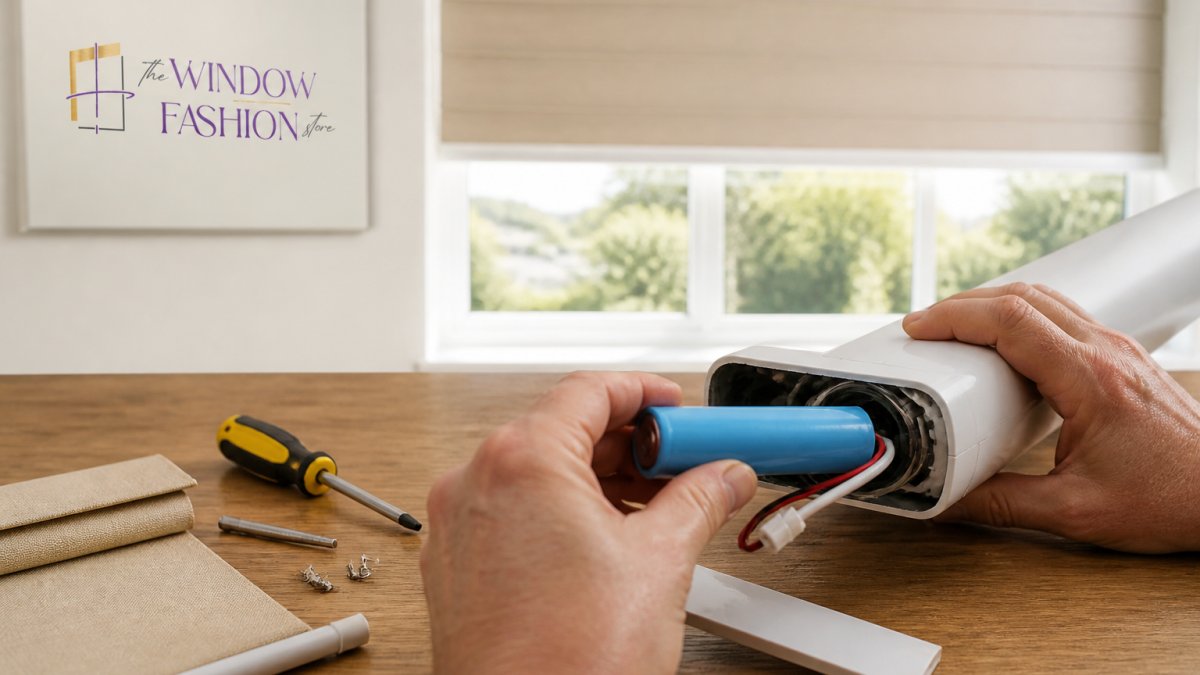
Maintenance and Care Practices
Keep your motorized blind system clean and functioning smoothly. Dust and debris can cause the motor to work harder, draining the battery faster.
Regular maintenance tasks:
- Wipe the headrail and slats monthly to prevent dust buildup
- Check that the blind moves smoothly without binding or dragging
- Inspect the wireless receiver for obstructions
- Keep the remote control clean and replace batteries in the remote itself regularly
A smooth-operating blind system uses less power per cycle. If your motorized blinds feel stiff or move slowly, have them inspected by a professional. The Window Fashion Store provides maintenance guidance for systems we install.
Optimal Charging Habits
Develop a charging routine that keeps your batteries healthy:
- Charge before the battery completely drains (recharge when you notice slower movement)
- Use the manufacturer’s recommended charger for your specific system
- Avoid leaving batteries uncharged for extended periods
- Store motorized blinds in moderate temperatures when not in use for long periods
Most rechargeable batteries perform best when they’re not repeatedly drained to zero. Charging at 20-30% remaining capacity extends overall lifespan compared to waiting until the battery is dead.
Programming and Automation Settings
Smart use of scheduling reduces overall battery drain:
- Set automated opens and closes to once or twice daily rather than multiple times
- Use motion sensors only if necessary (they add power draw)
- Disable notifications or status updates you don’t need
- Group blinds together for coordinated control (opening all blinds once uses less power than opening them individually)
If your motorized blinds integrate with a smart home system, review automation routines quarterly. Remove unnecessary schedules that run but aren’t actually used.
Troubleshooting Remote Control and Power Issues
When motorized blinds stop responding or move slowly, battery and power problems are often the cause.
Remote Not Responding or Weak Signal
If your remote doesn’t control the blinds, or requires multiple button presses:
Check the remote’s batteries first. The remote control itself uses separate batteries from the motorized blind system. Replace remote batteries if they’re low.
Verify line of sight. For infrared remotes, point directly at the blind’s receiver without obstruction. Radio frequency remotes work through walls but still need reasonable proximity.
Check receiver placement. The wireless receiver should be mounted in a location that receives a strong signal from your remote. Avoid placing it behind metal objects or inside metal enclosures.
Restart the system. Power cycle the motorized blind by disconnecting it briefly (if possible) or following the manufacturer’s reset procedure. This clears temporary signal issues.
Blinds Moving Slowly or Stopping Mid-Operation
Slow movement or incomplete cycles usually indicate low battery charge or motor strain.
Recharge the battery. This is the most common fix. Connect the motorized blind to its charger and allow a full charge cycle (typically 2-4 hours).
Check for mechanical binding. If the blind moves slowly even after charging, the issue might be mechanical. Ensure the blind moves freely without resistance. Dust, debris, or misalignment can cause the motor to work harder.
Verify motor connections. Loose wiring inside the motorized unit can reduce power delivery. Have a professional inspect connections if you’re comfortable opening the unit, or contact The Window Fashion Store for service.
What Happens During Power Loss or Battery Failure
If your motorized blind loses power completely, here’s what to expect:
Battery failure means the rechargeable battery no longer holds a charge. The motorized unit will need a battery replacement. Contact The Window Fashion Store to discuss replacement options for your specific system.
Power outages don’t permanently damage motorized blinds. Once power is restored and the battery recharges, the system returns to normal operation. Some systems remember their last position; others reset to a default state.
If your motorized blinds fail to operate after power is restored, follow the manufacturer’s restart procedure or contact a professional for assistance.
Choosing and Installing Motorized Blinds for Long Battery Life
When you’re selecting motorized blinds for your home, battery performance should factor into your decision.
Design Gallery and Product Selection
Visit The Window Fashion Store’s Design Gallery to see full-sized displays of motorized blinds from Hunter Douglas, Alta Window Fashions, Norman, and Texton. You can examine the motor units, feel how smoothly they operate, and understand the quality differences between systems.
Our Design Gallery lets you:
- See actual products and how they function
- Compare motor efficiency and build quality
- Understand fabric and color options
- Evaluate control systems (remote, wall switch, smartphone app)
Quality motorized systems perform longer and require less frequent charging. A premium motor might cost more upfront but saves time and frustration over years of use.
Professional Installation and Setup
Proper installation directly impacts battery performance. A motorized blind that’s installed correctly moves smoothly and uses less power per cycle.
The Window Fashion Store provides professional installation in our local service area. Our team:
- Takes exact measurements to ensure proper fit
- Installs motors and receivers for optimal signal strength
- Sets up programming and automation correctly
- Explains charging and maintenance procedures
We exclusively install and service products purchased directly through our store.
Schedule a free consultation to discuss motorized blinds for your home.
Understanding what affects battery life helps you plan maintenance and avoid surprises.
The Window Fashion Store helps you select and install motorized blinds designed for reliable long-term operation.
Hunter Douglas motorized shade technology
Energy efficiency and smart home integration guide
Wireless device interference and signal strength
Frequently Asked Questions
How long do motorized blinds batteries typically last before needing replacement?
Rechargeable batteries in motorized blinds can last several years with normal use. Within each charge cycle, most systems run for a period of weeks to months between recharges, depending on how frequently you open and close your blinds. Replaceable battery systems also offer a good lifespan. The actual lifespan depends on usage frequency, motor efficiency, and environmental factors like temperature.
What factors affect how long motorized blinds battery life lasts?
Several factors impact motorized blinds battery life: daily usage and cycle count (more frequent operation drains batteries faster), motor type and efficiency (some motors are more power-efficient), wireless signal strength and remote control range (weak signals require more power), temperature extremes (cold reduces battery performance), and battery age (older batteries hold less charge). Premium motors designed for efficiency can extend battery performance compared to standard units.
How often do motorized blinds need to be recharged?
Recharging frequency depends on usage. Light users may recharge every few months. Moderate users typically recharge monthly. Heavy users may need recharging every few weeks. Most systems include low-battery indicators or smartphone app alerts to signal when charging is needed. Establishing a regular charging routine helps prevent unexpected power loss.
What batteries do motorized blinds use?
Most modern motorized blinds use rechargeable lithium-ion or NiMH batteries built into the motor unit or control receiver. Some systems use replaceable AA or AAA batteries in the remote control or wireless receiver. Premium systems feature integrated rechargeable packs that charge via USB or a dedicated charging dock. Hunter Douglas and similar premium manufacturers typically use proprietary rechargeable battery systems designed for durability and efficiency. Always check your specific product documentation to understand your system’s power requirements and charging method.