


Table of Contents
- Start With Function: Light Control, Privacy, and Insulation
- Best Window Treatments for Light Control by Room Type
- Custom Blinds vs Shades: Which One Fits Your Space?
- How to Measure Windows for Custom Treatments
- How to Choose Window Treatments That Match Your Home’s Style
- Motorized Window Treatment Benefits Worth Knowing
- Sustainability, Maintenance, Acoustics, and Accessibility
- How to Choose Window Treatments With Expert Help
Choosing the right window treatments is one of the most consequential design decisions in any home, yet most homeowners approach it backwards: they pick a style they like, then try to make it work. At The Window Fashion Store, we’ve spent over 20 years watching that approach produce light gaps, privacy problems, and expensive regrets. This guide walks you through how to choose window treatments the right way, starting with function, then style, then fit.
Start With Function: Light Control, Privacy, and Insulation
The single most important question to answer before you look at a single fabric swatch is: what does this window need to do? Light control, privacy, and insulation are distinct requirements, and the treatment that excels at one often compromises another.
Blackout vs. Light-Filtering vs. Sheer Fabrics
Blackout fabric blocks nearly all incoming light and is the right choice for bedrooms where sleep quality matters, media rooms, and spaces with daytime glare problems.
Light-filtering fabrics soften and diffuse daylight without eliminating it, preserving a sense of connection to the outdoors while reducing harsh glare. Woven wood shades and light-filtering cellular shades fall into this category.
Sheer panels transmit the most light and offer minimal privacy during daylight hours. They work beautifully as a layered treatment, paired with a heavier shade or drapery panel that can be drawn when privacy is needed.
Privacy Levels by Room
Not every room needs the same privacy level. Matching fabric opacity to room function prevents frustration.
- Bedrooms: Blackout or room-darkening treatments. Light gaps at the sides are the most common complaint, often caused by inside mount installations on shallow window casings.
- Bathrooms: Top-down/bottom-up cellular shades are an excellent solution. You get natural light from above while maintaining sightline privacy from outside.
- Living rooms: Light-filtering shades layered with drapery panels give you flexibility throughout the day.
- Home offices: Glare control matters more than blackout. Light-filtering shades with UV protection reduce screen glare without making the room feel cave-like.
- Kitchens: Moisture resistance and ease of cleaning should drive the decision. Faux wood blinds or washable roller shades are practical choices.
According to U.S. Department of Energy guidance on window coverings, cellular shades are among the most effective window treatments for reducing heat loss in winter and heat gain in summer, thanks to their honeycomb structure that traps air as a thermal barrier.
Match fabric opacity to room function first. Blackout for sleep, light-filtering for living spaces, sheer only as a layer. Getting this wrong is the most common and most expensive mistake in window treatment selection.
Best Window Treatments for Light Control by Room Type
Different rooms create genuinely different problems, and the treatment that works in a dining room will often fail in a bedroom.
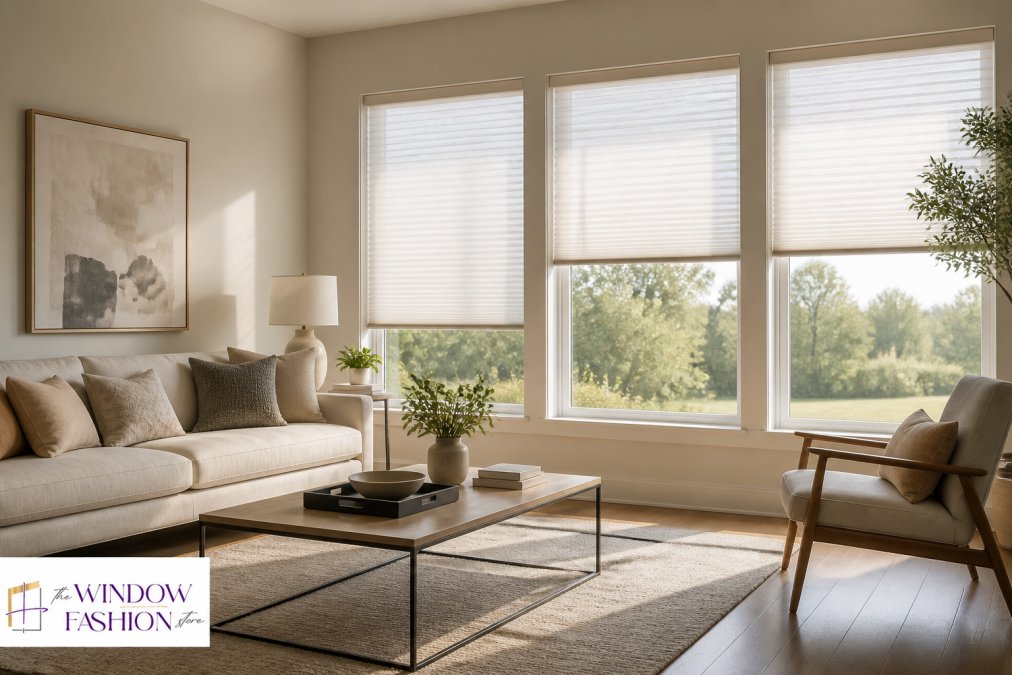
For living rooms, the most versatile approach is a layered system: a light-filtering roller shade or cellular shade for daytime privacy and glare control, with drapery panels on a traverse rod for evenings and full privacy.
Bedrooms demand blackout or room-darkening treatments. Cellular shades in a blackout fabric are popular because they also provide thermal efficiency. If you want a softer aesthetic, blackout drapery panels with a blackout liner achieve the same result with more visual warmth.
Home offices benefit from light-filtering shades positioned to control the angle of incoming light. Woven wood shades diffuse light beautifully and add texture without making the space feel closed off.
Kitchens and bathrooms are where moisture resistance becomes the deciding factor. Faux wood blinds, aluminum blinds, or moisture-resistant roller shades outlast fabric options in high-humidity environments. For bathrooms, top-down/bottom-up functionality is genuinely useful.
| Room | Recommended Treatment | Key Priority |
|---|---|---|
| Bedroom | Blackout cellular shades or drapery with liner | Sleep quality, room darkening |
| Living Room | Light-filtering shade + drapery panels | Flexibility, UV protection |
| Home Office | Light-filtering roller or woven wood shades | Glare control |
| Kitchen | Faux wood blinds or moisture-resistant roller | Durability, easy cleaning |
| Bathroom | Top-down/bottom-up cellular shades | Privacy with natural light |
| Media Room | Blackout roller shades or cellular shades | Full room darkening |
Custom Blinds vs Shades: Which One Fits Your Space?
The terms "blinds" and "shades" get used interchangeably, but they’re meaningfully different products.
Blinds use individual slats, horizontal or vertical, that tilt to control light direction and angle. They’re precise, durable, and well-suited to rooms where you want to redirect light rather than simply block or filter it.
Shades use a continuous piece of fabric that raises and lowers. They offer a cleaner, more contemporary look and come in a far wider range of fabric opacities, from sheer to blackout.
The honest answer to which is better depends on the window depth, the room’s function, and the aesthetic you’re after. Blinds tend to work better on shallower windows. Shades offer more design flexibility and better insulation performance in most residential applications.
When to Choose Drapery Panels or Valances Instead
Drapery panels add softness, visual height, and acoustic dampening. A well-hung drapery panel, mounted close to the ceiling and extending beyond the window frame on each side, makes a room feel larger and more finished than almost any other treatment.
Valances and cornices are finishing elements rather than primary treatments. A cornice box conceals hardware and creates a polished, architectural look.
Hang drapery panels as high as possible, ideally within a few inches of the ceiling, and extend the rod at least 6 inches beyond the window frame on each side. This makes windows appear significantly larger and keeps the fabric from blocking natural light when the panels are open.
How to Measure Windows for Custom Treatments
Knowing how to measure windows correctly is the difference between a treatment that fits precisely and one that lets in light gaps or looks awkward. Measurement errors are the single most common source of problems with custom window coverings.
Inside Mount vs. Outside Mount
Inside mount installs the treatment within the window casing. It produces a clean, built-in look and works well when you want to showcase the window trim. You need sufficient window depth to accommodate the headrail or bracket, typically at least 2.5 to 3.5 inches. Measure the width at three points (top, middle, and bottom) and use the narrowest measurement. Measure height on the left, center, and right, and use the longest.
Outside mount installs the treatment on the wall above and outside the window frame. It’s the better choice for shallow window casings, for covering an entire wall of windows, or for making a window appear larger. Add at least 2 to 3 inches on each side of the window frame to prevent light gaps, and mount the hardware 2 to 4 inches above the casing.
According to guidance from the Window Covering Manufacturers Association, precise measurement is especially critical for custom-fit treatments because they cannot be returned for a different size after fabrication.
Common measurement mistakes to avoid:
- Measuring only once, always measure three times at different points
- Forgetting to account for stacking depth on roller shades
- Ignoring obstructions like window cranks, handles, or locks inside the casing
- Assuming all windows in a room are the same size
Never assume a window is square. Out-of-square windows are extremely common, especially in older homes. If your inside mount measurements show more than a quarter-inch variation between the top and bottom widths, flag this before ordering.
How to Choose Window Treatments That Match Your Home’s Style
Function gets you to the right product category. Style gets you to the right product. These two decisions are easier to make in sequence than simultaneously.
Architectural style is the best starting point. A craftsman home with visible wood trim calls for natural materials: woven wood shades, wood blinds, or linen drapery panels. A contemporary home with clean lines suits roller shades, cellular shades, or motorized shades with concealed hardware. Traditional homes with elaborate molding can support more decorative treatments: pinch pleat drapery panels, valances, and cornice boxes.
Matching Hardware Finishes and Architectural Details
Hardware finish is where many otherwise well-planned installations fall apart. A brushed nickel traverse rod looks wrong in a room with oil-rubbed bronze door handles. Match your window treatment hardware to the dominant metal finish in the room.
The style of the hardware should match the formality of the room. A simple grommet panel on a plain rod reads as casual and contemporary. A pinch pleat panel on a decorative traverse rod reads as traditional and formal. Fabric texture also plays a role: woven wood shades add warmth and organic texture, crisp roller shades read as modern and minimal, and sheer linen drapery panels soften a room without adding visual weight.
Motorized Window Treatment Benefits Worth Knowing
Motorized shades are no longer a luxury category, they’re a practical upgrade that solves specific problems that manual treatments cannot.
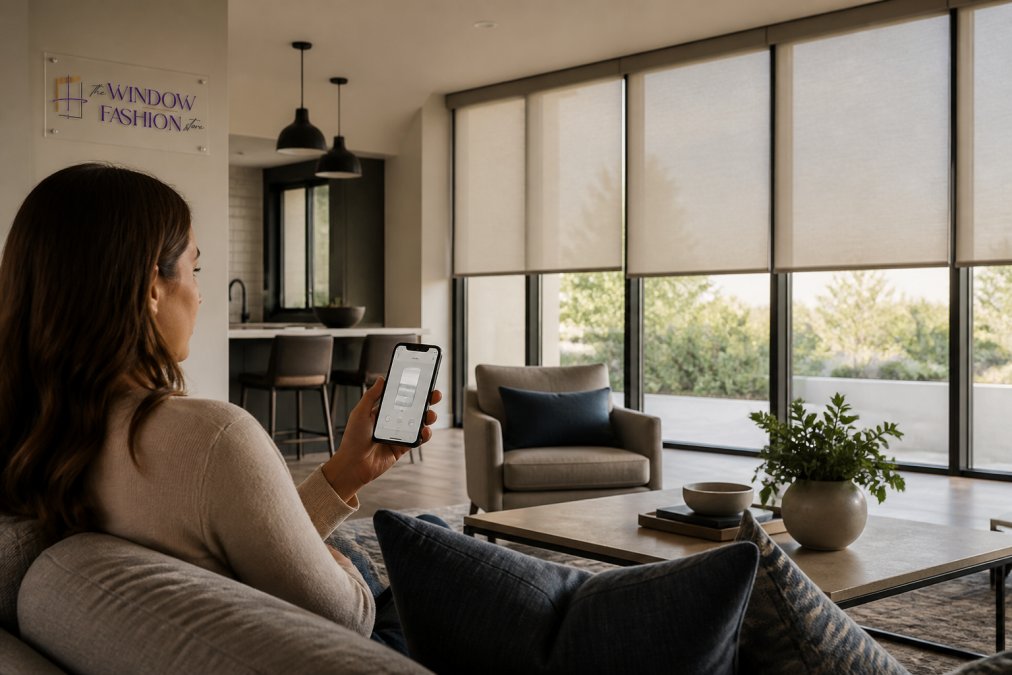
The most compelling case for motorization is hard-to-reach windows. Skylights, windows above staircases, and floor-to-ceiling glazing are genuinely difficult to operate manually. Motorized shades with a cordless lift mechanism eliminate the problem entirely.
Motorized shades offer real energy efficiency gains. Automated scheduling lets you program shades to lower during peak afternoon heat in summer and raise during sunny winter afternoons to capture solar gain. The Lawrence Berkeley National Laboratory research on automated window coverings has documented meaningful reductions in cooling load when motorized shades are programmed to respond to sun position.
Child safety is another factor often overlooked. Cordless lift and motorized systems eliminate the looped cords that pose a strangulation risk to young children. The U.S. Consumer Product Safety Commission guidance on window covering cord safety strongly recommends cordless or motorized options in any home with children under six.
The Window Fashion Store carries motorized options across high-quality manufacturers, and our Design Gallery has working motorized displays so you can see exactly how they operate before you commit.
Sustainability, Maintenance, Acoustics, and Accessibility
This section covers the details that separate a treatment that works well for a year from one that works well for a decade.
Eco-Friendly and Sustainable Material Options
Sustainable window treatments are a growing category. Woven wood shades made from bamboo, jute, or grasses are renewable materials that add natural texture. Many manufacturers now offer fabrics certified to GREENGUARD Gold standards for low chemical emissions, an important consideration for bedrooms and children’s rooms.
Cleaning and Long-Term Care
The biggest maintenance mistake is using the wrong cleaning method for the fabric type.
- Cellular shades: Use a hair dryer on a cool setting or a soft brush attachment on a vacuum. Avoid water.
- Roller shades: Wipe with a lightly damp cloth for spot cleaning. Most fabric roller shades are not washable.
- Woven wood shades: Dust regularly with a soft brush. Avoid moisture, which can cause warping.
- Faux wood blinds: Wipe with a damp cloth. They’re the most washable option and the right choice for kitchens and bathrooms.
- Drapery panels: Check the fabric care label. Many require dry cleaning; some can be machine washed on a delicate cycle.
Acoustic Dampening and Universal Design
Fabric window treatments absorb sound. In rooms with hard floors, high ceilings, and minimal soft furnishings, the acoustic difference between bare windows and full drapery panels is substantial. Heavy drapery panels with a lining are the most effective option for acoustic dampening.
Universal design, designing spaces to be usable by people of all ages and abilities, is increasingly relevant to window treatment selection. Motorized shades with app or voice control are the most accessible option for people with limited mobility or dexterity. Cordless lift mechanisms are easier to operate than traditional corded systems. Top-down/bottom-up functionality allows privacy adjustment without requiring full reach to the window sill.
How to Choose Window Treatments With Expert Help
The variables involved in choosing window treatments, room function, window dimensions, mount type, fabric opacity, hardware finish, motorization, and style, add up quickly. Most homeowners find that working through them alone produces either paralysis or compromise.
The most efficient path is to start in our Design Gallery where you can see full-sized, functioning displays of every product. Seeing a cellular shade at actual window scale, operating a motorized roller shade, and comparing fabric opacities side by side in real light conditions tells you more in 20 minutes than hours of online research.
The Window Fashion Store’s Design Gallery features full-sized displays of products from high-quality manufacturers, every fabric, every function, every color option, all working and touchable. For homeowners who prefer to see treatments in their own space and light, our in-home design consultations bring sample books directly to you, so you can evaluate fabrics against your actual walls, floors, and furniture.
Custom window treatments, precisely measured and professionally installed, eliminate the light gaps, awkward sizing, and hardware mismatches that come with off-the-shelf alternatives. We exclusively install and service products purchased directly through our store. Book a consultation with us to get started.
Frequently Asked Questions
How do I determine the right level of light control for my room?
Start by identifying how the room is used and at what time of day. Bedrooms used for daytime sleeping benefit from blackout or room-darkening shades. Living rooms and home offices typically work well with light-filtering or sheer options that reduce glare without blocking the view. Fabric opacity is the key variable: the denser the weave, the less light passes through. Visiting a design gallery where you can see full-sized displays in real lighting conditions makes this decision much easier.
What window treatments never go out of style?
Woven wood shades, pinch pleat drapery panels, and classic cellular shades have remained popular across decades because they balance function with timeless aesthetics. Neutral fabric colors, clean hardware finishes, and cordless lift mechanisms also tend to age well. Custom-fit treatments made to your exact window dimensions look more intentional than off-the-shelf options and hold their visual appeal longer because they were designed specifically for your space.
Are custom blinds worth the premium over store-bought options?
Custom treatments are cut to your exact window dimensions, which eliminates the light gaps and awkward sizing that pre-made blinds often leave behind. For oddly shaped or oversized windows, custom is often the only option that actually fits. Beyond fit, the material quality, fabric opacity choices, and hardware finishes available through custom manufacturers far exceed what big-box stores stock. Professional measurement and installation also remove the risk of costly errors.
What are the benefits of professional measurement and installation?
A professional measurer accounts for window depth, casing width, wall obstructions, and stacking depth before a single product is ordered. Errors caught at this stage prevent expensive remakes. During installation, hardware is anchored correctly into window frames or wall studs, ensuring treatments hang level and operate smoothly. For motorized shades, proper wiring and pairing with smart home systems requires technical knowledge that goes beyond a standard DIY install.
What is the current trend for window treatments in 2026?
Motorized and smart-home-integrated shades are the fastest-growing category, especially in new construction. On the design side, woven wood shades, linen-look drapery panels, and layered treatments combining a sheer with a room-darkening shade are all popular. Energy efficiency is also a growing priority: cellular shades with honeycomb construction provide measurable thermal efficiency, which resonates with homeowners focused on utility costs and sustainability.
Can window treatments help with noise reduction?
Yes, though the effect depends on the material. Heavier drapery panels with a lining, cellular shades, and woven wood shades all add a layer of acoustic dampening by absorbing sound waves that would otherwise reflect off bare glass. This benefit is most noticeable in rooms facing busy streets or open-plan spaces where echo is a problem. Layering a sheer with a heavier treatment increases both acoustic and thermal performance.
The hardest part of choosing window treatments isn’t picking a style, it’s knowing which functional requirements to prioritize and how to translate those into specific products. The Window Fashion Store has guided homeowners and commercial clients through exactly this process for over two decades, with professional measurement and installation included for every product we carry. Schedule a free consultation and let us bring the expertise, and the samples, to you.