


Table of Contents
- Start With the Fabric Care Label and Fiber Composition
- How to Remove Dust From Curtains Without Taking Them Down
- Step-by-Step: How to Clean Custom Draperies That Are Machine Washable
- Spot Cleaning Custom Drapes: Stains, Residue, and Color Bleeding
- Steam Cleaning and Hardware: What Most Guides Skip
- Professional Drapery Cleaning Services: When DIY Goes Wrong
- A Yearly Schedule for Keeping Custom Draperies Clean
- Frequently Asked Questions
Last Updated: September 12, 2026
Start With the Fabric Care Label and Fiber Composition
Knowing how to clean custom draperies begins with one small tag. The fabric care label inside the heading tells you whether a panel is washable, dry-clean only, or spot-clean only, and that detail decides everything that follows. Ignore it and you risk shrinkage, fading, or a ruined lining on a panel that cannot be replaced off the shelf.
Fiber composition matters just as much. Cotton and linen can shrink in hot water, silk and rayon lose colorfastness when soaked, and polyester blends hold up well in a gentle cycle (fabriclink.com). Read the fiber content and care symbols before you touch water or cleaning solution.
At The Window Fashion Store, we’ve watched homeowners damage beautiful panels simply because they guessed. The label is the manufacturer’s instruction for keeping fabric integrity intact.
Never assume a drapery panel is machine washable just because it feels sturdy. Many lined and interlined custom panels carry a dry-clean-only label because the lining and face fabric shrink at different rates.
How to Remove Dust From Curtains Without Taking Them Down
You can remove most surface dust without removing the panels at all. Routine dusting is the most effective way to extend the time between deeper cleanings, and it takes only a few minutes per window.
Start with dry soil removal before any moisture touches the fabric. Use a hand-held vacuum on low suction with an upholstery or soft brush attachment, working from the top down so loosened dust falls away rather than settling back on clean fabric.
For pleated curtains and delicate fabrics, switch to a microfiber cloth or clean paintbrush and use light strokes along the pleats. Pressing hard drives dust into the weave instead of lifting it off.
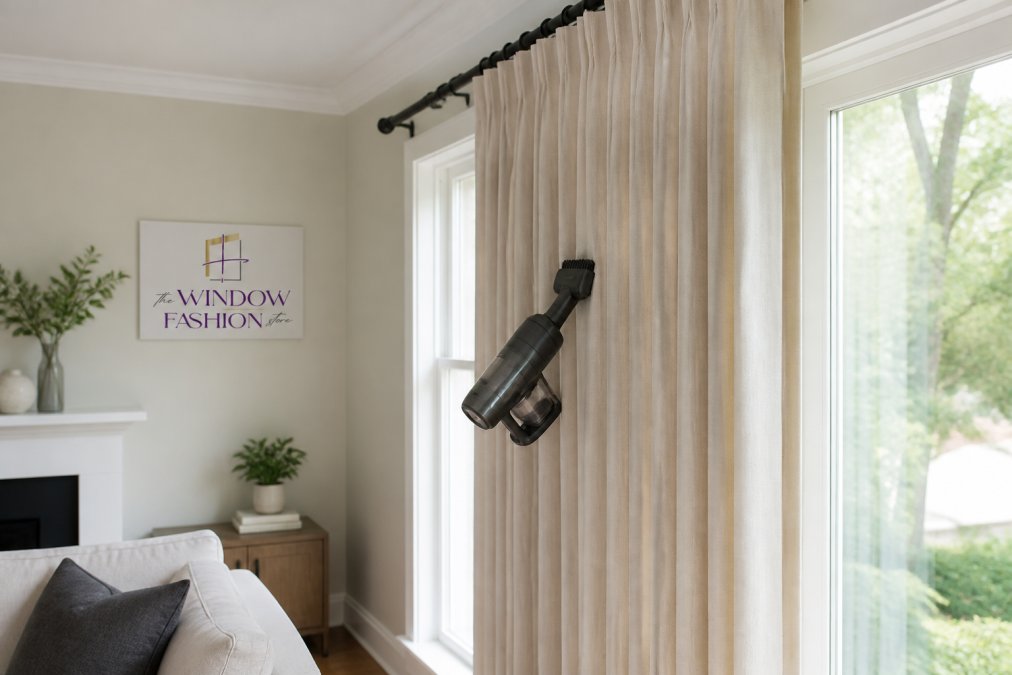
Do this every few weeks to control dust, help with allergens, and keep fabric fresh between professional cleanings.
Step-by-Step: How to Clean Custom Draperies That Are Machine Washable
Only wash panels whose care label permits it. Machine washing is safe for many cotton and polyester blends, but wrong for silk, rayon, or anything labeled dry-clean only.
- Remove all drapery hardware: rings, hooks, weights, and tiebacks.
- Vacuum both sides of each panel to remove loose dust first.
- Check seams and hems for loose threads, and mend them before washing.
- Wash one panel at a time to avoid overcrowding and uneven agitation.
- Use cold water and a gentle cycle with mild detergent.
- Skip fabric softener, which leaves residue that attracts dust.
- Hang to air dry rather than using a machine dryer.
Detergent, Water Temperature, and Cycle Settings
Use a mild detergent for delicate fabrics, and less than you think you need, excess detergent leaves residue that dulls color and stiffens fabric. Cold water protects colorfastness and reduces shrinkage risk. Always choose the gentle cycle, and never mix draperies with heavier items like towels or jeans.
Drying and Re-Hanging Without Shrinkage
Shrinkage prevention comes down to heat and handling. Machine dryers are the leading cause of shrunken custom panels, so air dry whenever possible (cleaninginstitute.org). Hang panels back on the rod while still slightly damp; the fabric’s weight helps them drip dry straight and smooth. To press, use the lowest heat on the reverse side, or a steamer held at a safe distance.
Spot Cleaning Custom Drapes: Stains, Residue, and Color Bleeding
Spot cleaning custom drapes is the safest option for panels that cannot be fully washed. Act quickly, but test first: apply a small amount of cleaning solution to an inconspicuous area, such as the back of a bottom hem, and let it dry completely to check for color bleeding or ring marks.
Blot, never rub. Rubbing pushes a stain deeper into the fibers and can damage the weave. Work from the outside of the stain inward to prevent spreading. For residue removal, follow with a clean, damp cloth and blot dry. Persistent spots on silk or linen require extra caution, as washing delicate natural fibers demands a gentler touch to preserve the integrity of the fabric.
Matching the Cleaner to the Stain and the Fabric
Not every stain responds to the same approach, and not every fabric tolerates the same cleaner. A few pairings that hold up:
- Water-based stains (coffee, wine, juice): A drop of mild dish soap in cool water, applied with a white cloth. Blot from the edge toward the center.
- Grease and oil: A small amount of dry-cleaning solvent on a white cloth. Water alone will spread grease rather than lift it.
- Ink and cosmetics: Isopropyl alcohol on a white cloth, tested first on a hidden hem. Alcohol can dull some synthetic finishes, so use a light touch.
- Protein stains (food, pet accidents): Cool water and a mild enzyme cleaner. Warm water can set protein stains permanently (extension.psu.edu).
Fabric matters as much as the stain. Silk and rayon water-spot from the slightest moisture, so blot with a barely damp cloth and dry immediately on a cool hair-dryer setting. Cotton and linen tolerate more moisture but can bleed dye if not colorfast-tested. Polyester blends are the most forgiving and rarely bleed.
Always use a white cloth, never a colored one. Dye from a colored towel can transfer to a damp panel and create a stain that is harder to remove than the original.
When Things Go Wrong: Shrinkage, Bleeding, and Ring Marks
Most guides stop at the cleaning steps. The harder question is what to do when a home attempt goes sideways:
- Shrinkage: If a panel comes out of a wash shorter than its mate, the damage is usually permanent. Natural fibers shrink at the weave level, and no amount of stretching restores the original dimensions. The panel will need to be replaced or reordered as part of a matched set.
- Color bleeding: If dye has migrated into a light area, stop cleaning immediately. Further moisture spreads the dye. A professional cleaner may be able to lift some of it, but results are not guaranteed, especially on silk and rayon.
- Ring marks: These form when a cleaning solution dries unevenly. Re-wet the entire area evenly with distilled water and blot dry with a clean white towel. Do not spot-treat the ring itself, which usually makes it worse.
- Water spots on silk: These are often permanent. Silk fibers swell and distort when wet, and the spot is a change in the fiber structure, not a residue. Prevention is the only reliable cure.
If a stain does not lift after two gentle attempts, stop. Further effort usually sets the stain or damages the finish, and a professional can assess it with better tools. For custom panels, the risk calculation favors caution.
The panels that survive a stain are not the ones cleaned hardest. They are the ones tested first, blotted gently, and handed to a professional before a small problem becomes a replacement order.
Steam Cleaning and Hardware: What Most Guides Skip
Steam cleaning is safe for many fabrics, but not universally. The heat and moisture that relax wrinkles in polyester can shrink or water-spot silk, rayon, and some lined panels. Test on a hidden area first, keep the steamer moving, and never hold it against one spot.
Safe Steam Settings by Fabric Type
Steamers vary, but a few principles hold across most consumer and professional units:
- Polyester and polyester blends: Medium steam, held 6-8 inches from the fabric, is generally safe. These fibers are heat-tolerant and respond well to steam for wrinkle release.
- Cotton and linen: Medium to high steam works, but keep the head moving. Prolonged contact can leave water marks on natural fibers, especially in humid rooms.
- Silk and rayon: Use the lowest steam setting, or skip steam entirely. These fibers are prone to water spotting and can lose luster with repeated heat exposure.
- Velvet and velvet blends: Steam from the back side only, and never crush the pile. Direct steam on the face can flatten nap permanently.
- Lined and interlined panels: Steam the face fabric, not the lining. The lining and face fabric absorb moisture at different rates, and uneven shrinkage is the most common cause of a wavy, puckered panel after steaming.
Holding the steamer against the fabric until wrinkles disappear is the fastest way to create a water ring or shiny spot. Keep the head moving in slow, overlapping passes, and let the fabric cool and dry before judging the result.
Never steam a panel that is still damp from spot cleaning. Trapped moisture under heat can set a stain or leave a permanent ring. Let the fabric dry completely first.
Caring for Rods, Rings, Grommets, and Pleats
Hardware care is the angle most cleaning guides ignore, yet it affects how your draperies hang and last. Rings, grommets, and tracks collect dust, skin oils, and humidity, and that buildup transfers to the fabric at the exact points where it folds.
- Rods: Wipe with a dry or barely damp cloth; never soak them, especially wood rods. Metal rods can develop surface rust in humid rooms, which then streaks the fabric.
- Rings and grommets: Wipe each one individually with a microfiber cloth. Check for rough edges or burrs that can snag fabric every time the panel opens and closes.
- Tracks and glides: Vacuum with a crevice tool on low suction, then wipe with a dry cloth. Never lubricate a track with oil, which attracts dust and gums up the glide.
- Pleats: Re-form pleats by hand after cleaning while fabric is still slightly damp. This is the single easiest way to keep a custom panel looking tailored between professional cleanings.
- Brackets and finials: Tighten periodically so panels hang evenly. A loose bracket lets the rod sag, which pulls the pleats out of alignment over time.
Lining and Interlining: The Layer Most Owners Forget
Lining and interlining do more than add weight. They block light, insulate, and protect the face fabric from sun fading. They also require different care than the face fabric, which is why so many custom panels carry a dry-clean-only label even when the outer fabric is washable.
Inspect the lining every few months for:
- Sagging or drooping below the hem, which signals the lining has stretched or the stitching has failed.
- Yellowing or browning along the leading edge, often the first sign of sun damage or moisture exposure.
- Puckering or rippling across the panel, which usually means the lining and face fabric have shrunk at different rates.
When a lining starts to fail, the whole panel loses its shape, and that is a job for a professional. Because we know the exact fabric and construction of what we sold you, we can guide care correctly from day one.
Professional Drapery Cleaning Services: When DIY Goes Wrong
Professional drapery cleaning services exist for the panels you should not touch yourself. Call a professional when the care label says dry-clean only, when the fabric is silk, velvet, or heavily lined, when a stain has set, or when you notice shrinkage or color bleeding after a home attempt.
Custom panels are measured and made for your specific windows. A shrunken or discolored panel often cannot be matched without reordering the entire treatment, which is why high-end fabrics deserve expert handling.
This is also where working with the original source pays off. The Window Fashion Store exclusively installs and services products purchased directly through our store, including Hunter Douglas, Alta, Norman, and Texton. Because we know the exact fabric and construction of what we sold you, we can guide care correctly from day one. If you’re still deciding on new panels, our Custom Window Treatments – Shades and Custom Window Treatments – Shutters are built with the same care guidance in mind, and a Free Consultation can help you match fabric to the way you actually live.
A Yearly Schedule for Keeping Custom Draperies Clean
A simple calendar keeps custom draperies looking new for years. Periodic maintenance beats emergency cleaning.
| Frequency | Task | Why It Matters |
|---|---|---|
| Every 2-4 weeks | Vacuum and dust panels | Controls dust accumulation and allergens |
| Every 3 months | Inspect hardware and pleats | Catches snags and sagging early |
| Every 6 months | Spot treat and air out | Removes residue before it sets |
| Once a year | Deep clean or professional service | Protects fabric integrity long term |
Treat this as a baseline, not a rule. Homes with pets, heavy sun exposure, or open windows need more frequent attention; low-traffic homes with closed windows can stretch the intervals.
The panels that last the longest are not the ones cleaned hardest. They are the ones dusted regularly, washed gently, and handed to a professional before a small problem becomes a replacement.
Custom draperies are an investment in how your home looks and feels, and they reward careful handling. When a panel is delicate, lined, or too valuable to risk, the safest path is expert care from the people who know the fabric best. The Window Fashion Store has spent over 20 years helping homeowners protect their window treatments, and our Design Gallery lets you see fabrics, colors, and construction up close before you commit. Book a consultation and we’ll help you choose, measure, and care for window coverings built to last.
Frequently Asked Questions
What is the best way to clean custom draperies without damaging the fabric?
Start by reading the fabric care label and noting the fiber composition, since that decides whether you can wash or must dry clean. For most custom panels, routine care means dry soil removal with a hand-held vacuum on low suction using a brush attachment, then spot treatment for marks. Only machine wash on a gentle cycle with cold water and mild detergent when the label allows it. If the fabric is silk, velvet, or lined, leave it to professional drapery cleaning services rather than risk shrinkage or color bleeding.
Can I vacuum my custom curtains while they are still hanging?
Yes, and it is the safest routine step you can take. Use a hand-held vacuum or an upholstery attachment set to low suction, and run it down the panel in slow vertical passes. A brush attachment lifts dust from the surface without pulling at the weave. Pay extra attention to the top hem and pleats, where dust accumulation is heaviest. Doing this every few weeks controls allergens and reduces how often the panels need a full wash.
How often should custom draperies be professionally cleaned?
Most homes should schedule professional dry cleaning every 12 to 24 months, depending on traffic, pets, and whether windows are opened regularly. Homes near busy roads or with allergy sufferers may need it yearly. Vacuuming and spot treatment between visits extend the interval. If you notice fading, lingering odors, or stiff, dull fabric that spot treatment will not lift, that is the signal to stop delaying and book a professional cleaning.
How do I remove dust from delicate custom window treatments?
Skip the vacuum entirely for sheer or delicate fabrics. Instead, use a soft microfiber cloth or a clean, dry paintbrush and work from the top of the panel downward so dust falls away rather than settling back into the weave. You can also use a canister vacuum on the lowest suction with a soft brush attachment, holding the fabric steady with your free hand. For anything fragile or lined, ask a professional before you touch it.