


Table of Contents
- Why Traditional Blinds Fall Short for Insulation
- Energy Efficient Cellular Shades: The Honeycomb Advantage
- Roller Shades and Modern Fabric Solutions
- Shutters: Permanent Insulation and Light Control
- Custom Drapery and Roman Shades for Thermal Performance
- Motorized and Smart Window Treatments
- Benefits of Professional Window Treatment Installation
- Choosing the Right Alternative for Your Climate
- Frequently Asked Questions
Last Updated: September 28, 2026
When traditional blinds fall short on insulation, modern alternatives to traditional blinds for insulation deliver what older styles simply cannot. Today’s window treatments go far beyond basic light control, they actively reduce heat transfer, lower energy costs, and maintain comfort year-round. Whether you’re renovating a new build or upgrading existing windows, understanding your options helps you choose the right solution for your home’s climate and design.
The window treatments you choose directly impact your home’s insulation and energy efficiency. Below, we’ll explore the most effective alternatives and why professional installation makes all the difference.
Why Traditional Blinds Fall Short for Insulation
Traditional blinds create gaps that allow air to pass through, around, and between slats. Thin aluminum or vinyl slats don’t trap air the way modern materials do, leaving space for drafty air to move freely and resulting in higher heating and cooling costs.
Modern alternatives solve this by creating thermal barriers. Whether through honeycomb structures, dense fabrics, or solid construction, newer window treatments address what traditional blinds ignore: controlling heat transfer itself. That’s why homeowners in variable climates increasingly reject traditional blinds in favor of solutions designed for thermal performance.
Energy Efficient Cellular Shades: The Honeycomb Advantage
Cellular shades represent the single most effective modern alternative to traditional blinds for insulation purposes. Their honeycomb structure traps air in multiple chambers, creating an insulating layer that reduces heat transfer significantly.
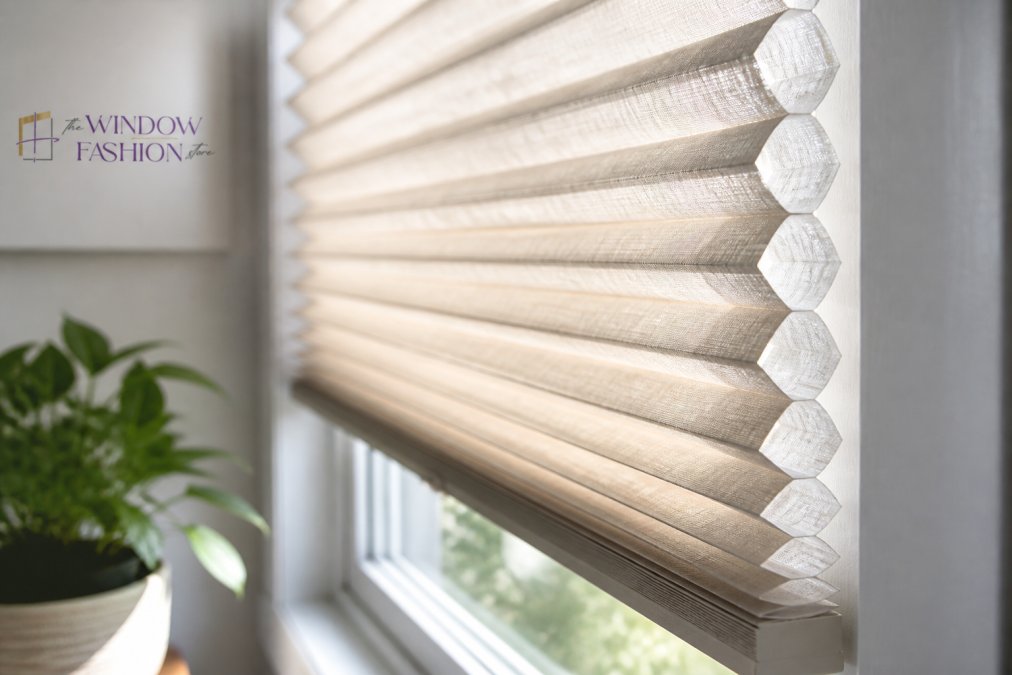
How Honeycomb Structures Trap Heat
The honeycomb design works through a simple principle: still air is an excellent insulator. Each cell in the shade contains trapped air that resists temperature transfer. When you raise the temperature inside your home in winter, that warm air stays inside longer. In summer, the shade blocks solar gain and keeps cool air from escaping as quickly.
This thermal barrier effect reduces the workload on your HVAC system. Your heating and cooling equipment doesn’t need to run as frequently or as long to maintain your desired temperature. Over time, this efficiency translates to measurable energy savings.
Fabric density matters: thicker, tightly woven materials provide better insulation. Light-filtering options maintain views with thermal benefits; blackout shades eliminate nearly all light transmission and provide maximum insulation.
Single vs. Double Cell Options
Single-cell shades provide solid insulation for most climates with a sleek profile. Double-cell shades create a thicker thermal barrier and perform better in extreme climates, though with a slightly thicker appearance when raised. Choose double-cell for variable climates; single-cell for mild climates or moderate sun exposure.
Roller Shades and Modern Fabric Solutions
Roller shades offer a contemporary aesthetic with modern performance fabrics engineered to manage both light and heat transfer. Unlike cellular shades, which rely on trapped air chambers, roller shades work through fabric density, weave construction, and specialized coatings that reduce solar transmission and convective heat loss.
Modern roller shade fabrics fall into three performance tiers:
Light-filtering fabrics use open weaves with UV-blocking treatments to reduce solar heat gain by 40-60% while maintaining views. They work well in mild climates but offer lower winter insulation.
Room-darkening fabrics use tighter weaves with backing layers that reflect light and heat, blocking 85-95% of incoming light. They perform better in hot climates and on south-facing windows.
Blackout fabrics use dense construction with opaque backings that nearly eliminate light transmission (99%+) and provide superior thermal resistance, particularly when paired with side channels that seal edges.
Fabric insulates through reflectance (bouncing solar radiation) and thermal mass (absorbing and releasing heat). Darker colors absorb heat (beneficial in winter, counterproductive in summer); lighter colors reflect heat year-round, ideal for hot climates.
Roller shades mount flush to the window frame with a clean-line aesthetic that works well in modern interiors.
Professional installation is critical for thermal performance. Gaps allow air to bypass the fabric barrier; expert installers use side channels, seals, and precise mounting to minimize thermal leaks. Even a quarter-inch gap can reduce effectiveness by 20-30%.
Roller shades pair well with other window treatments; layering them with thermal drapery or cellular shades maximizes insulation in cold climates.
Shutters: Permanent Insulation and Light Control
Shutters are permanent installations that provide continuous thermal and light control. Engineered wood and composite shutters resist warping and provide reliable performance for decades, creating an effective thermal barrier when closed.
Adjustable louvers let you fine-tune light and temperature. Closed shutters provide complete blackout and maximum insulation. Once installed, shutters stay in place, but they deliver unmatched durability and long-term performance.
Custom Drapery and Roman Shades for Thermal Performance
Heavy drapery with thermal linings provides exceptional insulation. Roman shades combine soft, tailored aesthetics with shade functionality and perform well at reducing heat transfer when paired with thermal linings.
Both options work best when they extend fully to the window frame and stack completely when raised. Gaps around the edges compromise thermal performance, so precise measurement and professional installation are essential.
The fabric you choose matters. Heavier materials provide better insulation than lightweight fabrics. Darker colors absorb more heat in winter (beneficial) and reflect more heat in summer (also beneficial). The combination of fabric weight, color, and thermal lining creates the overall performance profile.
Motorized and Smart Window Treatments
Motorization transforms how window treatments manage energy. Automated shades can open and close on schedules that align with your climate patterns, closing during the hottest parts of the day in summer, opening during sunny winter days to capture solar gain.
Smart home integration lets you control shades from your phone or voice commands. You can program different schedules for different rooms based on sun exposure and usage patterns. Some systems learn your preferences and adjust automatically.
The real energy benefit comes from consistent operation. Motorized shades follow your programmed schedule reliably. Manual shades depend on you remembering to adjust them, and most people don’t optimize for energy efficiency. Automation removes that human variable.
Motorized cellular shades and roller shades both offer smart integration options. The insulating properties of the shade itself don’t change with motorization, but the consistency of operation amplifies the energy benefits you get from the shade’s thermal performance.
Benefits of Professional Window Treatment Installation
Professional installation ensures your window treatments actually deliver the insulation performance they’re designed for. Measurement precision matters enormously. Even small gaps around the edges of a shade allow air to bypass the thermal barrier.
Expert installers understand how to mount shades to minimize these gaps. They know the best hardware for your specific window type and size. They ensure smooth operation and proper function. These details determine whether your new window treatments deliver the energy savings you’re paying for.
Professional installation also protects your investment. Correctly installed shades last longer and perform better than poorly installed alternatives. The labor cost is small compared to the performance gains and longevity you achieve.
At The Window Fashion Store, we bring decades of experience to every installation. Our team understands how different window treatments perform in various climates and configurations. We help you select the right alternative to traditional blinds based on your specific needs, then install it correctly to maximize your results.
Choosing the Right Alternative for Your Climate
Your climate determines which alternative to traditional blinds for insulation makes the most sense. The key is matching the shade’s thermal properties to your region’s dominant challenge: heat loss in winter, solar gain in summer, or both.
Cold climates (heating-dominant): Regions with sustained winter temperatures below 20°F and significant heating seasons benefit most from double-cell cellular shades or shutters. Double-cell shades create two air barriers that slow heat loss through the window, reducing the temperature difference between indoor and outdoor air. In extreme cold, the insulation value of a double-cell shade can reduce window heat loss by 40-50% compared to an unshaded window. Shutters provide even greater thermal resistance when closed, but they sacrifice daytime light and views. Pair cellular shades with thermal drapery in bedrooms and living spaces for maximum winter performance.
-
South-facing windows receive intense, direct sun year-round. In winter, this passive solar gain is beneficial; in summer, it’s a cooling burden. Motorized cellular shades or roller shades that close during summer afternoons and open on winter mornings optimize this exposure. Double-cell shades provide better insulation for winter heat retention.
-
North-facing windows receive no direct sun and stay cooler. They benefit less from solar gain in winter and less from solar blocking in summer. Single-cell shades or light-filtering roller shades often provide sufficient performance at lower cost. Focus on edge sealing to prevent drafts, as north-facing windows are prone to air infiltration.
-
East-facing windows receive intense morning sun. Blackout or room-darkening shades that close during early morning hours reduce solar gain and heat buildup. Open them by mid-morning to allow natural light for the rest of the day.
-
West-facing windows experience the most intense afternoon and evening sun, particularly in summer. These windows benefit most from blackout shades or reflective roller shades that stay closed during peak heat hours. This single adjustment can reduce cooling costs significantly.
Frequently Asked Questions
What type of window treatments provide the best thermal insulation?
Cellular shades with honeycomb structures offer superior thermal insulation due to the air pockets trapped within the cells. Double-cell designs provide even better performance than single-cell options. Custom drapery with thermal lining and shutters also deliver excellent insulation by creating a thermal barrier. For maximum energy efficiency, professional installation ensures a precise fit that eliminates gaps where heat escapes.
Are cellular shades more effective at insulating than traditional blinds?
Yes. Traditional blinds allow significant air gaps around and between slats, which reduces their insulating ability. Energy efficient cellular shades feature a sealed honeycomb design that traps warm or cool air, reducing heat transfer through your windows. This design difference makes cellular shades substantially more effective for temperature regulation and reducing your HVAC load.
Can motorized shades actually save energy, or is that just marketing?
Motorized shades can save energy when programmed to adjust automatically based on sun exposure and time of day. Smart scheduling closes shades during peak heat hours in summer and opens them during winter to capture solar gain. This automated temperature regulation reduces strain on heating and cooling systems. Professional installation ensures proper calibration for maximum efficiency in your specific climate.
How do custom window treatments compare to off-the-shelf alternatives for insulation?
Custom window treatments are measured and installed to fit your exact window dimensions, eliminating light gaps and air leaks that reduce insulation performance. Off-the-shelf products rarely fit perfectly, leaving spaces around edges where heat escapes. Professional installation also ensures proper mounting depth and operation, which affects thermal performance. The precision fit of custom solutions directly impacts energy savings and home comfort.