


Table of Contents
- Smart Motorization and Home Automation Integration
- Energy-Efficient Window Coverings for Modern Homes
- Natural Textures and Sustainable Materials
- Layering Curtains and Blinds for Style and Function
- Minimalist Roller Shades and Clean Lines
- How to Choose Window Treatments for Modern Homes
- Motorized Window Shades Benefits and Practical Applications
- Bringing Modern Window Treatment Design Trends to Your Home
- Frequently Asked Questions
Last Updated: September 20, 2026
Modern window treatment design trends emphasize smarter automation, sustainable materials, and intentional aesthetics. At The Window Fashion Store, we’ve spent 20+ years helping Kansas City homeowners translate these trends into installations that actually work for their lives. Below, we’ll walk you through the design trends that matter most in 2026 and how to bring them into your home.
Smart Motorization and Home Automation Integration
Motorized window shades have moved from luxury to practical standard. Smart motorization lets you control light, privacy, and temperature throughout the day, and integration with Apple HomeKit and Amazon Alexa means your windows work alongside your entire smart home ecosystem.
Hunter Douglas PowerView Automation schedules shades to open with sunrise, close during peak heat, and adjust for glare automatically. Voice control and mobile app access work seamlessly, giving you remote control whether at home or away.
What to Verify Before You Buy
Not all motorized shades integrate equally with smart home platforms. Before committing, confirm:
- Hub requirement: Does the system need a separate hub device, or does it connect directly to your Wi-Fi? Hunter Douglas PowerView, for example, requires a hub, which adds to setup but provides more reliable control than Wi-Fi-only systems in homes with spotty connectivity.
- Voice assistant compatibility: Confirm the specific voice assistants supported. Most modern systems work with Amazon Alexa and Google Assistant, but Apple HomeKit support is less universal. If you’re invested in one ecosystem, verify compatibility before purchase.
- Scheduling precision: Can you set schedules based on sunrise/sunset (which changes seasonally), or only fixed times? Sunrise/sunset scheduling is more useful for energy management because it adapts automatically.
- Remote access range: Does the app work only on your home Wi-Fi, or can you control shades from anywhere? This matters if you want to close shades while away on vacation.
- Backup manual operation: If the system fails or loses power, can you still operate the shades manually? This is a critical safety feature, especially for blackout shades in bedrooms.
Setup and Reliability Reality
Initial setup typically takes 1-2 hours. Professional installation support is available. Once running, motorized systems are reliable, though they occasionally need a hub restart or app update. Voice control is accurate about 95% of the time in normal conditions.
The Practical Benefit
Motorized shades reduce energy costs by optimizing natural light and thermal gain. They solve real problems for hard-to-reach windows and provide genuine accessibility for families with mobility concerns. The most satisfied users automate their most-used windows, bedroom shades that open with an alarm, living room shades that close during afternoon heat, rather than automating every window.
Motorization works best on windows you use daily. Bedroom shades that open automatically with your alarm, or living room shades that close during afternoon heat, these are the installations where you’ll feel the difference most immediately. Start with one or two key windows rather than automating your entire home at once.
Integration with Existing Smart Home Systems
Motorized shades integrate into existing smart home routines. Closing shades at sunset or opening bedroom shades before your alarm runs automatically. When window coverings coordinate with your thermostat, closing shades during peak heat reduces cooling load, creating an integrated thermal management system.
Energy-Efficient Window Coverings for Modern Homes
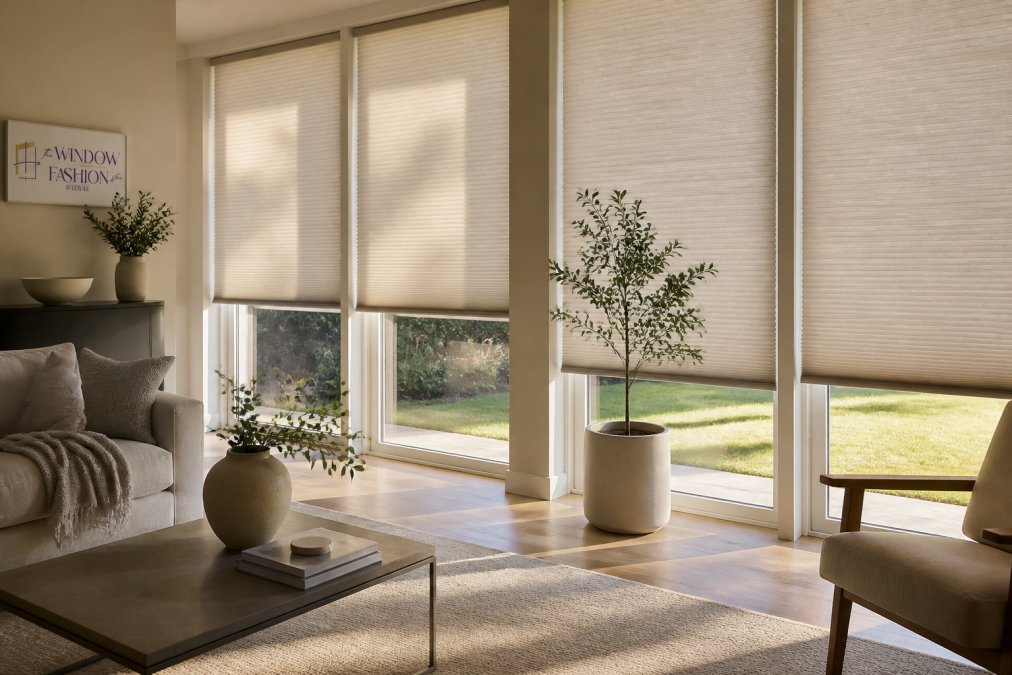
Energy efficiency has become non-negotiable in modern design. Cellular shades with honeycomb construction trap air in pockets, creating an insulating barrier that keeps heat in during winter and blocks solar gain in summer.
Hunter Douglas Duette Honeycomb Shades provide genuine insulation while remaining visually clean and modern. Multiple pleat sizes and opacity levels let you maintain light control and aesthetics. Top-down/bottom-up operation gives you flexibility to manage privacy and light independently.
Real Maintenance Reality
Cellular shades require careful cleaning because dust settles in the honeycomb cells. Use a soft brush attachment on a vacuum monthly to remove surface dust. For deeper cleaning, use a slightly damp microfiber cloth on the fabric itself, but avoid saturating it. Most homeowners find quarterly deep cleaning sufficient with monthly vacuuming. The maintenance trade-off is real but manageable, and the energy savings justify it for most homeowners.
Pairing with Smart Control
Pair cellular shades with smart motorization to actively manage your home’s thermal profile. Automated schedules can close shades during peak afternoon heat and open them during cooler morning hours, reducing cooling costs measurably. In winter, opening shades during sunny days and closing them at dusk captures solar gain while minimizing heat loss at night.
Longevity Expectations
Well-maintained cellular shades typically last 7-10 years before fading or wear appears. Protect them from direct, intense sunlight to extend lifespan. Motorization components often outlast the fabric, so replacement is usually just the shade material, not the entire system.
Natural Textures and Sustainable Materials
The move toward natural materials reflects a design shift toward authentic texture and warmth. Woven wood shades bring organic character while maintaining clean lines. Materials like bamboo, reeds, and grasses create visual interest without clutter.
Alta Woven Wood Shades deliver this aesthetic with genuine sustainability. Each shade has natural variation in color and texture, so no two installations look identical. You can add privacy or blackout liners for light control. This approach works especially well in bedrooms and living rooms.
Natural materials require care, dust settles on woven surfaces and sunlight can fade them over time. Many homeowners see this as part of the material’s character; it ages authentically.
Natural textures work best when paired with a minimalist color palette. Warm earth tones, creams, soft grays, warm whites, let the material itself be the visual interest rather than competing with bold colors or patterns.
Layering Curtains and Blinds for Style and Function
Modern layering combines sheer panels with functional roller shades or cellular shades underneath. This gives you visual softness, light control, and privacy all in one system.
The classic combination is sheer drapery that filters light during the day, paired with a roller shade or cellular shade for blackout capability at night. Hunter Douglas Luminette Privacy Sheers diffuse light while vertical vanes rotate for precise light direction. Layer them with a blackout shade underneath for complete control.
Texton Custom Drapery offers tailored fabric options as the visible layer. Pinch-pleat or ripplefold headings add visual sophistication. When paired with motorized shades underneath, the system becomes both beautiful and functional.
Minimalist Roller Shades and Clean Lines
Minimalism in window treatments means function without visual noise. Roller shades embody this philosophy, they disappear when raised and provide clean lines when lowered.
Texton Roller Shades excel at this with precision-engineered mechanisms and fabric options ranging from solar to blackout.
How to Choose Window Treatments for Modern Homes
Choosing modern window treatments comes down to three questions: What do you need the treatment to do? What aesthetic fits your space? And what’s realistic for maintenance?
Avoid the trap of choosing based on price alone. A cheap shade that doesn’t fit your windows properly or requires constant adjustment will frustrate you far more than a slightly higher investment in something that works exactly as intended. Modern design is about intentionality, choose treatments that actually solve your problems.
Motorized Window Shades Benefits and Practical Applications
Motorized window shades solve specific problems that manual operation simply cannot address. For large windows or high walls, motorization eliminates the physical reach problem. For anyone with mobility limitations, it provides genuine accessibility. For busy households, it enables automation that improves both comfort and energy efficiency.
Motorized shades work best for homeowners who value convenience, have mobility considerations, or manage large or hard-to-reach windows. They’re also ideal for anyone serious about energy efficiency and willing to invest in automation that delivers measurable results.
Bringing Modern Window Treatment Design Trends to Your Home
The window treatments you choose shape how light moves through your home, how private your spaces feel, and how intentional your design appears. Modern trends emphasize this connection, smarter automation, sustainable materials, layered functionality, and clean aesthetics aren’t separate concerns; they’re all part of creating spaces that work beautifully and perform efficiently. These integrated window solutions establish a refined backdrop that harmonizes seamlessly with the evolving landscape of luxury furniture design trends.
Hunter Douglas design inspiration and motorization systems
Alta Window Fashions custom shade and drapery collections
Norman premium shutters and smart window covering solutions
Frequently Asked Questions
What are the most popular modern window treatment design trends for 2026?
The leading trends include motorized and smart-home-integrated window coverings, energy-efficient cellular shades, natural woven textures, and layered treatments that combine soft drapery with functional blinds or shades. Minimalist roller shades with clean lines continue to dominate modern interiors. Warm earth tones and sustainable materials are increasingly preferred by homeowners seeking both style and environmental responsibility. Professional design consultation helps identify which trends work best for your specific space and lifestyle.
How do motorized window shades benefits improve daily living?
Motorized shades offer convenience through smartphone control, voice commands, and automated scheduling that adjusts light and privacy throughout the day. They eliminate the need for cords or manual operation, making them ideal for hard-to-reach windows, large installations, and families with young children. Integration with smart home systems like Apple HomeKit and Amazon Alexa allows seamless coordination with other home automation features. Beyond convenience, automated scheduling optimizes energy efficiency by managing solar heat gain during peak temperatures.
Are valances still considered modern window treatment design trends?
Traditional valances have largely fallen out of favor in contemporary design. Modern aesthetics favor clean, unobstructed sightlines and minimalist profiles. However, contemporary alternatives like simple architectural cornices or streamlined top treatments that complement roller shades or cellular shades are still used when they enhance the overall design. The focus has shifted toward functional elegance rather than decorative framing, with layered treatments providing visual interest without heavy fabric swags or ornamental details.
How do I choose between shades, blinds, and drapery for a modern aesthetic?
Start by evaluating your room’s function and light control needs. Roller shades offer a minimalist look ideal for modern spaces with clean lines. Cellular shades excel at energy efficiency and thermal insulation. Blinds provide superior privacy control without visual bulk. Drapery adds softness and visual height but requires more maintenance. Many homeowners layer treatments, combining shades or blinds with lightweight drapery panels for both style and practicality. A design consultation helps match your specific window sizes, room layout, and lifestyle to the right combination of window coverings.