


Table of Contents
- Motorized Shades for Sliding Glass Doors: What You Need to Know
- Types of Motorized Window Treatments for Sliding Doors
- Energy Efficient Shades for Homes: How Motorized Options Save on Utility Bills
- Smart Home Integration and Automation Features
- Custom Motorized Shade Installation: Professional Setup for Optimal Performance
- What Affects Motorized Shade Pricing
- Why Professional Installation Matters for Sliding Glass Doors
- Maintenance and Troubleshooting for Long-Term Performance
- Frequently Asked Questions
Last Updated: September 27, 2026
Motorized Shades for Sliding Glass Doors: What You Need to Know
Sliding glass doors present a unique challenge for homeowners. Standard window treatments often leave light gaps, don’t operate smoothly, or require manual adjustment multiple times daily. Motorized shades for sliding glass doors cost varies widely depending on the style, motor type, and customization level you choose, but the investment often pays dividends in convenience, energy efficiency, and modern aesthetics.
At The Window Fashion Store, we’ve guided hundreds of homeowners through this decision. Over our 20 years serving the Kansas City area, we’ve learned what actually matters when selecting motorized solutions for large glass surfaces. The right motorized shade system eliminates light leaks, operates at the touch of a button, and integrates seamlessly with your home’s smart systems if you want it to.
This guide breaks down the types of motorized window treatments available, how pricing actually works, and why professional installation makes a real difference on sliding glass doors.
Types of Motorized Window Treatments for Sliding Doors
Motorized window treatments come in several styles, each suited to different aesthetic preferences and functional needs. Understanding the differences helps you narrow your options before diving into customization details.
Motorized Roller Shades
Motorized roller shades remain the most popular choice for sliding glass doors. They mount directly to the door frame or wall above the opening, rolling up and down smoothly with a single motor. The fabric wraps around a motorized tube, creating a clean, minimalist look when raised.
Roller shades work well because they adapt to nearly any door width without complex installation. The motor sits inside the tube, so there are no visible mechanical components. Light filtering and blackout fabrics are both available, giving you control over privacy and glare. Many homeowners appreciate that roller shades don’t obstruct the view when fully raised, you get unobstructed glass during the day if you prefer.
The main consideration: roller shades work best when your sliding doors have adequate wall space above them. If your door frame sits close to a soffit or ceiling, mounting options become limited.
Motorized Cellular Shades
Cellular shades (also called honeycomb shades) use a different structure: fabric cells trap air, providing excellent insulation and sound dampening. When motorized, they offer the same convenience as roller shades with added energy efficiency benefits.
Cellular shades excel at reducing heat transfer through glass. The air pockets in the fabric create a barrier, keeping warm air inside during winter and blocking solar heat in summer. This makes them particularly valuable for sliding glass doors, which typically account for significant heat loss or gain in a home.
The trade-off: cellular shades have more visible depth than roller shades. The cellular structure is visible from outside, which some homeowners prefer for a more substantial appearance and others find less sleek.
Motorized Vertical Blinds and Panel Tracks
Vertical blinds and motorized panel track systems take a different approach. Instead of rolling, individual vertical slats or panels slide horizontally across the opening. This style works exceptionally well for very wide sliding glass doors because the motor doesn’t need to support as much fabric weight as a roller system.
Panel tracks offer a contemporary look and handle large expanses of glass elegantly. Each panel can operate independently or in unison, giving you flexibility in how much light you control. The downside: vertical systems require more wall space on the sides of your door, and they’re more complex to install correctly.
Energy Efficient Shades for Homes: How Motorized Options Save on Utility Bills
Motorized shades contribute to energy efficiency in two ways: through fabric selection and through consistent operation.
When you choose motorized cellular or insulating roller shade fabrics, you’re adding a thermal barrier to your sliding glass doors. Glass conducts temperature readily, in winter, heat escapes through unshaded glass, and in summer, solar gain through unshaded doors increases cooling demand. A motorized shade with insulating properties reduces that transfer.
The second benefit is consistency. Manual shades often stay in one position because people forget to adjust them or find it inconvenient. Motorized systems encourage regular adjustment, you can program them to close at sunset, open at sunrise, or adjust based on room temperature. Some smart motorized shades integrate with home automation systems, responding automatically to seasonal changes or time of day.
Research from the U.S. Department of Energy indicates that window treatments account for a significant portion of residential heating and cooling costs. While motorized shades aren’t a replacement for proper insulation or high-performance glass, they meaningfully reduce energy consumption when paired with efficient fabrics.
The energy savings accumulate over years. Homeowners who invest in motorized cellular shades often report noticeably lower summer cooling bills, especially on doors with southern or western exposure.
Smart Home Integration and Automation Features
Modern motorized shades connect to smart home ecosystems, letting you control them via smartphone app, voice command, or automated schedules.
Hunter Douglas PowerView, for example, integrates with Apple HomeKit, Amazon Alexa, and Google Assistant. You can say “Close the living room shades” or set schedules that adjust shades based on time of day or room occupancy. Alta Window Fashions and Norman motorized systems offer similar smart home compatibility through various hub systems.
The practical benefit: you never forget to close shades for privacy or open them for morning light. Automation handles it. If you’re away from home, you can control shades remotely, creating the appearance of occupancy or adjusting temperature for energy savings.
Smart integration does add to the overall cost, but many homeowners find the convenience justifies the investment. You’re paying for the motor, the control system, and the wireless connectivity, each layer adds expense, but together they create a genuinely useful system.
Custom Motorized Shade Installation: Professional Setup for Optimal Performance
Motorized shades for sliding glass doors demand precision during installation. Unlike manual shades, a misaligned motor or improperly secured mounting can cause binding, noise, or failure.
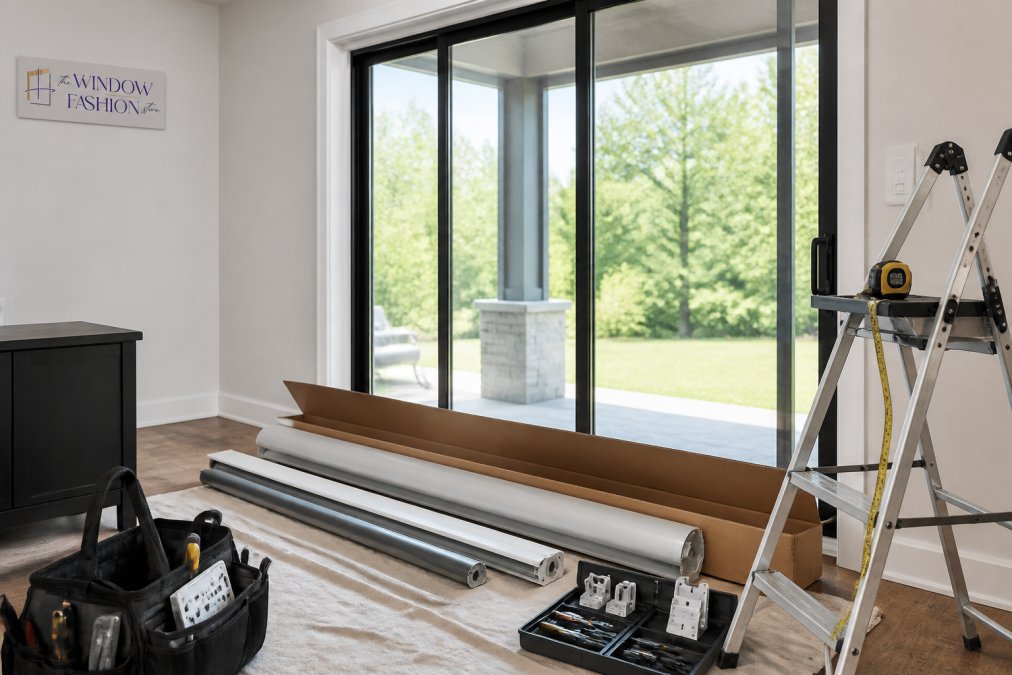
Ensuring the track and frame are perfectly level during this installation process is critical, as any underlying mechanical issues may necessitate a professional sliding door repair to ensure the new shades operate smoothly without obstruction.
Professional installation begins with exact measurements. Your sliding glass door’s width, height, and depth all affect how the shade mounts and operates. The mounting depth matters especially, if your door frame is shallow, a motorized roller shade’s tube might protrude beyond the frame, creating an awkward appearance or functional issues.
The technician confirms that the motor operates smoothly through its full range, that the fabric tracks properly, and that the shade stops at the correct positions. They also ensure electrical connections are safe and hidden, and that any smart home integration is configured correctly.
The Window Fashion Store handles all installation for products purchased through our store.
What Affects Motorized Shade Pricing
Several factors determine the final cost of motorized shades for sliding glass doors. Understanding these drivers helps you make informed choices.
Motor Type and Power Source
Motorized shades use either hardwired motors (connected to your home’s electrical system) or battery-operated motors (rechargeable or solar-powered).
Custom Sizing and Door Configuration
Motorized shades must be custom-built to fit your exact door dimensions. A sliding glass door that’s 72 inches wide and 84 inches tall requires a shade built to those specifications.
Fabric Selection and Light Control
Fabric choice affects both price and performance. Light-filtering fabrics cost less than blackout fabrics because they require less specialized material. Blackout fabrics use dense weaves or coatings to block nearly all light, which adds manufacturing complexity and cost.
Why Professional Installation Matters for Sliding Glass Doors
Sliding glass doors move constantly, they’re opened, closed, and locked daily. This repeated motion creates unique stresses on window coverings. A motorized shade that isn’t installed correctly will wear out quickly or fail to operate smoothly.
Maintenance and Troubleshooting for Long-Term Performance
Motorized shades require minimal maintenance compared to manual treatments, but a few practices extend their lifespan.
Frequently Asked Questions
What factors influence the total cost of motorized shades for sliding glass doors?
Motorized shade pricing depends on motor type (hardwired, battery-operated, or solar-powered), custom sizing to fit your exact door dimensions, fabric choice (light-filtering or blackout), smart home integration capabilities, and professional installation complexity. Larger doors and advanced automation features typically increase costs. Contact The Window Fashion Store for a personalized quote based on your specific door configuration and preferences.
Are motorized shades more energy-efficient than manual options?
Yes. Motorized shades enable precise scheduling and automation, allowing you to close them during peak heat hours or open them to capture natural warmth, reducing HVAC demand. Energy efficient shades for homes with blackout or cellular fabrics provide additional insulation value. Automated schedules ensure consistent coverage, maximizing energy savings year-round compared to manual shades that may be left open inconsistently.
Do motorized shades require professional installation for optimal performance?
Professional installation ensures correct mounting, proper motor calibration, and seamless integration with your door frame and smart home systems. Incorrect installation can cause misalignment, operational issues, and voided warranties. The Window Fashion Store provides expert measurement and installation for custom motorized shade installation, guaranteeing your shades operate smoothly and last for years.
What are the best motorized shades for sliding doors?
The best choice depends on your priorities: roller shades offer clean aesthetics and light-filtering control, cellular shades provide superior insulation and energy efficiency, and vertical blinds or panel tracks handle large openings effectively. Hunter Douglas, Alta Window Fashions, Norman, and Texton all offer high-quality motorized options. Visit The Window Fashion Store’s Design Gallery to see full-sized displays of every product and fabric option available.
How do smart home integrations affect the price of window treatments?
Smart home compatibility adds to the base cost but provides significant convenience and energy management benefits. Voice-activated controls via Alexa or Google Assistant, app-based operation, and automated scheduling allow you to adjust shades remotely or set them to respond to time of day and weather conditions. Premium brands with advanced hub systems typically cost more upfront but deliver greater automation flexibility and long-term energy savings.