


Table of Contents
- Comparison Table: Roller Shades vs Cellular Shades
- What Are Cellular Shades and How Do They Work?
- What Are Roller Shades and Their Energy Performance?
- Cellular Shades Insulation Benefits Explained
- Best Energy Efficient Window Shades for Different Climates
- Window Shade Design Consultation: Finding Your Perfect Match
- Durability, Maintenance, and Long-Term Value
- Making Your Decision: Pros and Cons Summary
- Frequently Asked Questions
Last Updated: September 29, 2026
Comparison Table: Roller Shades vs Cellular Shades
| Feature | Roller Shades | Cellular Shades | Energy Winner |
|---|---|---|---|
| Insulation Value | Minimal | Excellent | Cellular |
| Light Control | Good | Excellent | Cellular |
| Aesthetic Appeal | Modern, sleek | Contemporary | Tie |
| Maintenance | Simple | Moderate | Roller |
| Operating Options | Cordless, motorized | Cordless, motorized | Tie |
| Best For | Modern decor, glare control | Maximum energy savings | Cellular |
Choosing between roller shades vs cellular shades for energy efficiency depends on whether thermal performance or aesthetics matters most. Cellular shades dominate on insulation, while roller shades excel in minimalist design and ease of use.
What Are Cellular Shades and How Do They Work?
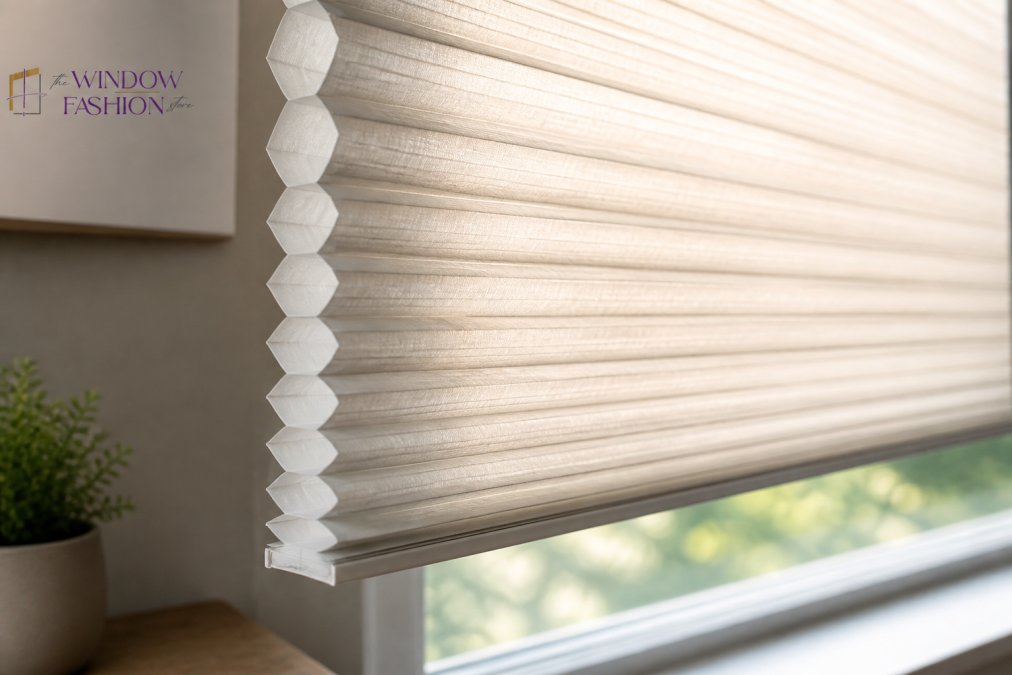
Cellular shades are window coverings built with a honeycomb design that traps air in chambers between the fabric layers. This air-pocket construction creates a thermal barrier between your window and your interior space. The shades are available in single-cell (one layer of honeycomb) or double-cell (two stacked layers) configurations, with double-cell providing superior insulation properties.
Those air pockets reduce heat transfer in both directions: keeping warm air inside during winter and reflecting solar heat gain during summer. This thermal resistance lowers your HVAC load, so heating and cooling systems work less hard to maintain comfortable temperatures.
Cellular shades come with cordless or motorized lift systems, top-down/bottom-up functionality, and fabric opacities from sheer to blackout. The air pockets also provide sound absorption, reducing outside noise, a benefit roller shades cannot match.
What Are Roller Shades and Their Energy Performance?
Roller shades are sleek, minimalist window coverings that roll up into a compact headrail when raised. A single fabric layer provides excellent light control and glare reduction without insulation benefit.
Roller shades excel at blocking unwanted light and UV protection. Their simplified design fits nearly any decor style and works well where aesthetics matter more than thermal performance.
A single fabric layer provides minimal thermal resistance compared to cellular shades. If energy efficiency is your primary goal, roller shades fall short, though they excel at glare control and aesthetic simplicity.
Cellular Shades Insulation Benefits Explained
Cellular shades’ air-pocket construction acts as a thermal barrier, reducing heat movement through your window. In winter, less heated air escapes; in summer, less solar heat gain penetrates your interior.
Understanding Thermal Performance
Cellular shades create dead air space that doesn’t conduct heat efficiently. Single-cell shades achieve R-3 to R-4, while double-cell shades reach R-5 to R-6, compared to R-1 for a standard single-pane window, cellular shades triple or quadruple insulation value.
A window alone might have a U-factor of 1.0; adding double-cell cellular shades reduces it to 0.15-0.20, a dramatic improvement that measurably reduces HVAC energy consumption.
Fabric Weight and Opacity Impact Performance
Double-cell shades provide roughly twice the insulation value of single-cell because they create two separate air layers. Blackout cellular shades provide maximum thermal resistance; room-darkening shades offer meaningful insulation with some light; sheer shades allow the most light but still insulate significantly, the honeycomb structure does most of the thermal work regardless of opacity.
Heavier fabrics reduce air circulation within the honeycomb cells, improving thermal efficiency, while lighter fabrics still insulate effectively.
Seasonal Energy Impact
Your HVAC system doesn’t need to work as hard to compensate for heat loss or gain through windows. Closing cellular shades at night can reduce nighttime heat loss by 40-50% in cold climates; closing shades during peak sun hours (10 AM to 4 PM) can reduce solar heat gain by 60-70% in warm climates.
Cellular shades reduce temperature swings near windows, creating fewer drafts and more consistent room temperatures.
For maximum energy performance, pair cellular shades with cordless or motorized operation. Motorized Blinds & Shades can be programmed to close automatically during peak sun hours in summer and at dusk in winter, amplifying your energy savings without requiring manual adjustment. This automation ensures consistent operation even when you’re away from home.
Best Energy Efficient Window Shades for Different Climates
The best choice depends on where you live and which season demands the most energy use.
Cold climates: Double-cell cellular shades with blackout or room-darkening fabric deliver maximum winter heat retention and reduce drafts.
Hot climates: Double-cell cellular shades with light-filtering or sheer fabric reflect solar heat gain while maintaining visibility. Closing them during peak sun hours (10 AM to 4 PM) reduces cooling load.
Temperate climates: Single-cell cellular shades offer adequate insulation year-round with a clean aesthetic.
Mixed-use spaces: Use cellular shades in bedrooms and living areas, and roller shades in utility areas where aesthetics matter more than thermal performance.
Cellular shades consistently outperform roller shades on energy efficiency. The difference becomes more dramatic in climates with extreme temperatures or long heating/cooling seasons.
Window Shade Design Consultation: Finding Your Perfect Match
Choosing between roller shades vs cellular shades for energy efficiency means balancing energy goals with design vision and budget.
Visit our beautiful Design Gallery to see full-sized displays of every Hunter Douglas, Alta Window Fashions, Norman, and Texton product we carry. You’ll see exactly how light filters through cellular and roller shade fabrics, colors, and styles in realistic room settings, something no online comparison can replicate.
During an in-home design consultation, our design team evaluates your windows’ orientation, frame depth, and existing decor. We discuss your priorities: Are you maximizing energy savings, prioritizing aesthetics, or seeking a balance? Do you want motorized operation for convenience? Are there rooms where privacy matters more than insulation, or vice versa? We bring sample books directly to your home so you can see how each option performs in your actual rooms before deciding.
We measure your windows precisely to ensure a perfect fit, critical because gaps around shades undermine both energy and privacy performance. Our custom window treatments are manufactured to exact specifications, with proper mounting depth and operation tailored to your windows.
The Window Fashion Store exclusively installs and services products purchased directly through our store, including Hunter Douglas, Alta Window Fashions, Norman, and Texton products. This means you’re not managing multiple vendors or dealing with installation mismatches. We handle measurement, fabrication, and professional installation as one seamless process.
Improper installation creates light gaps and air leaks that undermine any insulation benefit. Custom measurement and professional installation eliminate these problems.
Durability, Maintenance, and Long-Term Value
Material Longevity and Frame Compatibility
The honeycomb structure is durable, though the longevity depends on fabric quality and operating mechanism. Hunter Douglas Duette and Norman cellular shades, engineered for extended performance, often exceed this timeline. Roller shades typically last 7-10 years, with the fabric gradually losing opacity and the rolling mechanism wearing over time.
One often-overlooked durability factor is window frame depth. Cellular shades, particularly double-cell models, require adequate depth inside the window frame to mount properly. Shallow frames (less than 2 inches deep) may not accommodate double-cell shades, forcing a choice between single-cell (reduced insulation) or surface-mounting (which creates light gaps that undermine energy efficiency). Roller shades, being thinner, fit shallow frames more easily. If your windows have limited frame depth, this affects not just installation but long-term performance, improper mounting creates gaps that allow air leakage, negating thermal benefits.
Maintenance Requirements by Shade Type
Cellular shades require gentle, periodic cleaning. Dust accumulation inside the honeycomb cells can reduce their insulating effectiveness over time. A soft brush or vacuum with a brush attachment removes dust without damaging the fabric.
Operating Mechanism Durability
Long-Term Value and ROI
Professional Installation and Service
Making Your Decision: Pros and Cons Summary
Choose cellular shades if:
- Energy efficiency is your top priority
- You want to reduce heating and cooling costs year-round
- You’re in a climate with extreme temperatures or long heating/cooling seasons
- You value sound absorption and noise reduction
- You want maximum light blocking and privacy
- You’re willing to invest more upfront for long-term savings
Choose roller shades if:
- You prioritize modern, minimalist aesthetics
- Glare control and UV protection are your main concerns
- You prefer simple maintenance and operation
- You want a lower initial investment
- You need flexible light control without full blackout capability
- You’re outfitting multiple rooms on a budget
The reality: roller shades vs cellular shades for energy efficiency isn’t a close call if thermal performance matters. Cellular shades deliver measurably better insulation. But if your priority is clean design and glare management, roller shades remain an excellent choice, just understand you’re trading energy efficiency for aesthetics.
Frequently Asked Questions
Which is better for energy efficiency: cellular shades or roller shades?
Cellular shades provide superior thermal resistance because their honeycomb design traps air in single or double-cell chambers, creating an insulating barrier between your window and indoor space. This air pocket construction reduces heat transfer significantly more than roller shades, which are single-layer fabrics offering minimal insulation. For maximum energy savings, cellular shades outperform roller shades in nearly all climate conditions, though the difference is most noticeable in extreme temperatures.
What are the main disadvantages of roller shades?
Roller shades offer limited thermal insulation since they consist of a single fabric layer with no air gaps. They provide minimal protection against heat loss in winter or heat gain in summer, making them less effective for energy efficiency goals. Additionally, roller shades can allow light gaps around edges if not perfectly fitted, and they offer less sound absorption than cellular alternatives. For homeowners prioritizing energy savings, roller shades are generally the less efficient choice.
Do cellular shades work well in hot climates?
Yes, cellular shades excel in hot climates by reducing solar heat gain through their reflective properties and insulating air pockets. Double-cell designs provide even greater protection by creating two separate air chambers that block heat more effectively. Pairing cellular shades with light-filtering or blackout fabrics maximizes cooling efficiency. Many homeowners in warm regions see measurable reductions in air conditioning load when upgrading to quality cellular shades with proper mounting depth and light control options.
How do I choose between roller and cellular shades for my home?
Consider your climate, energy priorities, and design preferences. If energy efficiency and insulation are top concerns, cellular shades deliver superior performance. If you prioritize a minimalist aesthetic or have space constraints, roller shades offer clean lines and compact installation. For personalized guidance tailored to your specific windows and climate zone, schedule a free design consultation where we can bring sample books to your home and discuss which option best matches your needs and window frame depth requirements.