


Table of Contents
- Smart Blinds for Privacy and Light Control: What You Need to Know
- How Smart Blinds Balance Privacy and Natural Light
- Energy Efficient Shades for Homes: Thermal Regulation and Cost Savings
- Smart Home Integration and Automation Features
- Custom Window Treatment Design Consultation for Your Home
- Installation Types: Hardwired, Battery, and Solar-Powered Options
- Measuring Windows and Ensuring Proper Fit
- Frequently Asked Questions
Last Updated: October 1, 2026
Smart Blinds for Privacy and Light Control: What You Need to Know
Smart blinds for privacy and light control give you precise command over natural light and interior privacy. Motorized roller shades and automated window treatments adapt to your needs without manual adjustment, whether you’re managing glare or securing complete privacy at night.
Smart blinds solve multiple problems at once: energy bills drop as thermal insulation improves, sleep quality improves with blackout fabric options, and your interior spaces become more polished.
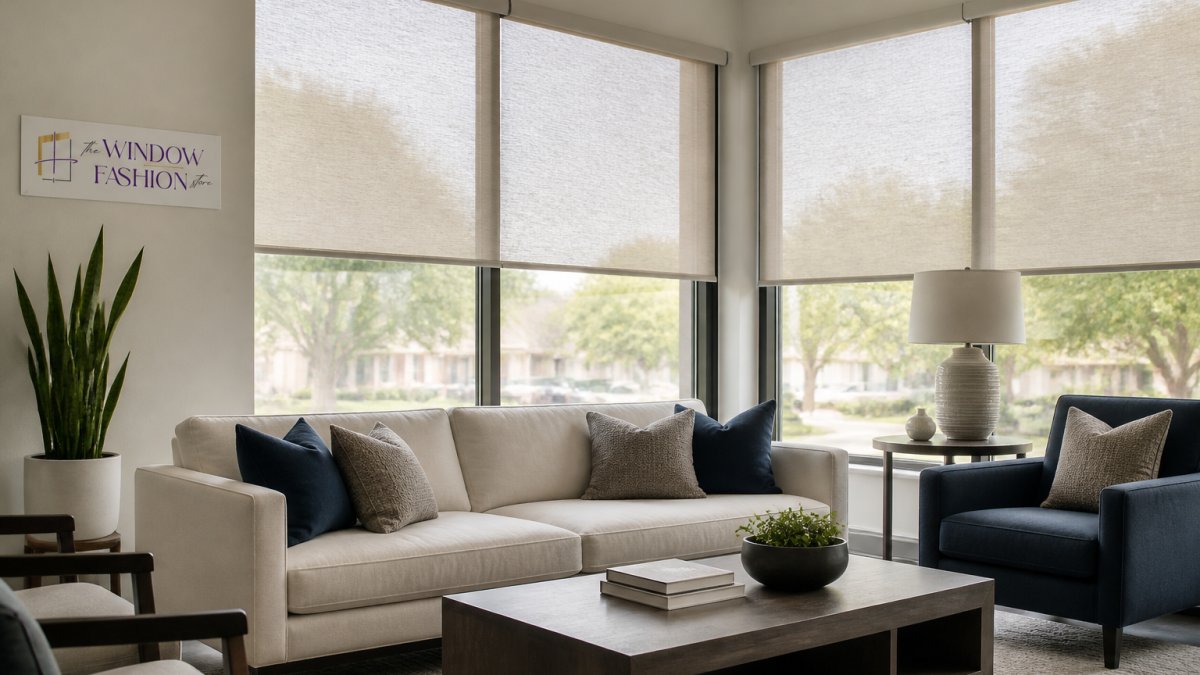
This guide covers how smart blinds balance privacy with natural light, fabric options, energy efficiency, automation features, and installation types.
How Smart Blinds Balance Privacy and Natural Light
Smart blinds for privacy and light control solve the core tension: you want natural light when you want it and complete privacy when you need it. Adjust opacity instantly with no manual tugging of cords.
Light filtering shades let diffused natural light through while blocking direct line of sight from the street. Blackout fabric stops nearly all light and offers maximum privacy.
Automation creates the real advantage.
Light Filtering vs Blackout Shades: Which Works Best
Light filtering shades maintain visibility to the outside world while preventing people from seeing in.
Blackout fabric blocks 99% of light and offers complete privacy. These work best in bedrooms and spaces where you need total light control, though you lose daytime views when shades are closed.
Smart blinds for privacy and light control work best when you can switch between both.
Privacy Fabric Options and Opacity Levels
Fabric opacity ranges from sheer to room-darkening to blackout. The choice depends on your specific room and how you use it.
Sheer fabrics work in bathrooms and kitchens where you want to see outside. Room-darkening fabrics offer significant privacy and light reduction without complete darkness. Blackout fabrics are essential for bedrooms and spaces where light control affects function or comfort.
Custom window treatment design consultation helps you match the right opacity level to each room’s actual needs. The Window Fashion Store brings sample books to your home so you can see how different fabrics perform with your actual windows and lighting conditions.
Energy Efficient Shades for Homes: Thermal Regulation and Cost Savings
Energy efficient shades for homes create an insulating layer between your interior and the outside. In summer, closed shades block solar heat gain.
Motorized roller shades amplify this benefit. Hardwired systems integrate with your smart home ecosystem and adjust shades based on outside temperature, time of day, or sun position.
Homes using smart blinds for privacy and light control typically see heating and cooling costs decline. Bedrooms stay cooler at night when blackout shades are closed.
How Fabric Density Affects Thermal Performance
Thermal performance depends on fabric density, weave structure, and the air gap between the shade and the window. Lightweight sheer fabrics provide minimal insulation.
The denser the fabric, the more light it blocks and the more effectively it insulates. Your choice of opacity level for privacy also determines your thermal efficiency.
Custom window treatments match fabric density to each room’s actual needs.
Seasonal Variation and Long-Term Maintenance
Thermal savings vary by season. In summer, closed shades during peak heat hours reduce cooling load. In winter, closing shades after sunset reduces heat loss. The cumulative effect across a season is substantial.
Motorized shades accumulate dust and debris over time, reducing thermal effectiveness. Regular light dusting maintains performance. Battery-powered systems require periodic charging; neglecting this eliminates automated scheduling. Hardwired systems eliminate battery maintenance but still require occasional cleaning.
Acoustic Insulation as a Secondary Benefit
Denser fabrics used for privacy and thermal control also contribute to noise reduction. Blackout and room-darkening fabrics with tight weaves absorb sound energy, reducing outside noise transmission.
Using motorized shades to close them during peak noise hours or maintain them closed in bedrooms during sleep hours compounds this benefit. The combination of thermal insulation, privacy, and noise reduction makes dense-fabric smart blinds a multi-functional investment.
Smart Home Integration and Automation Features
Modern smart blinds for privacy and light control connect to your home automation ecosystem. The real value emerges when you understand what integration requires and how to maintain it long-term.
Hub-based control systems let you manage multiple shades from a single app. Scene setting means one command closes all bedroom shades while opening living room shades. However, this convenience depends on consistent power and network connectivity.
Integration with voice assistants (Alexa, Google Home) means you can control shades by voice. This accessibility matters for aging-in-place scenarios where physical strength or mobility limitations make manual shade adjustment difficult, transforming window treatments into assistive technology.
Voice Control and App-Based Scheduling
Voice control integration lets you manage shades without touching a remote or phone. App-based scheduling creates routines that run automatically. You can set different schedules for weekdays and weekends, adjust them seasonally, or override them manually.
Combining voice control with app-based scheduling lets you override preset routines instantly with a voice command if your plans change.
Sunrise and Sunset Automation Routines
Sunrise and sunset automation uses your location and the actual sunrise/sunset times for your area. Shades begin opening 30 minutes before sunrise, gradually increasing light exposure.
This type of automation aligns with your body’s natural circadian rhythm. Morning light exposure helps regulate sleep-wake cycles (Effects of light on human circadian rhythms, sleep and mood). Evening darkness signals your body to prepare for rest. Smart blinds for privacy and light control that follow this pattern often result in better sleep quality without requiring you to remember to close shades manually.
Battery-powered systems running on this schedule typically require recharging every 6-12 months, depending on how frequently shades cycle. Solar-powered systems reduce charging burden but perform inconsistently during winter months or in north-facing windows where sunlight is limited.
Custom Window Treatment Design Consultation for Your Home
Custom window treatments start with precise measurements and understanding how you actually use each room.
This matters because what works beautifully in a showroom might not suit your actual space. Morning light angles differently in every home. Your wall colors, furniture, and architectural style all influence which fabric choices feel right.
The Window Fashion Store’s Design Gallery features full-sized displays of every Hunter Douglas, Alta Window Fashions, Norman, and Texton product we carry.
Installation Types: Hardwired, Battery, and Solar-Powered Options
Three installation approaches serve different situations. Hardwired systems connect directly to your home’s electrical supply.
Battery-powered motors use rechargeable battery packs that typically last 6-12 months between charges. Setup is simpler, no wiring required.
Solar-powered motors charge during daylight hours and work best in windows with good sun exposure. They offer the convenience of motorized shades without wiring or battery charging.
| Installation Type | Best For | Key Consideration |
|---|---|---|
| Hardwired | New construction, major renovations | Requires electrical work |
| Battery-Powered | Existing homes, retrofit situations | Periodic recharging needed |
| Solar-Powered | Windows with consistent sun exposure | Performance varies by season |
Measuring Windows and Ensuring Proper Fit
Precise measurements are non-negotiable for custom window treatments.
Measure width at three points: top, middle, and bottom of the window opening. Measure height at three points: left, center, and right.
The Window Fashion Store handles measurements as part of the custom window treatment process.
Choosing smart blinds for privacy and light control requires balancing automation convenience with your actual privacy and light needs.
Frequently Asked Questions
What are the best smart blinds for privacy that still let in light?
Light-filtering shades provide the ideal balance for privacy and natural light. These shades allow diffused sunlight to enter while preventing people outside from seeing into your home. Motorized roller shades with light-filtering fabric let you adjust opacity throughout the day using an app or voice command. Pair them with cordless design for a clean look and enhanced safety. Many homeowners combine light-filtering shades with blackout options in bedrooms for flexible control.
Can I see out of smart blinds while keeping people from seeing in?
Yes, certain light-filtering and semi-sheer fabrics allow you to see out while blocking the view from outside. The key is fabric opacity and angle. When shades are partially open during the day, the angle of sunlight makes it difficult for outsiders to see in, while you maintain a clear view out. Custom window measurement ensures your shades fit perfectly, eliminating light gaps that compromise privacy. Professional installation guarantees proper function and alignment.
How do motorized shades improve home energy efficiency?
Motorized shades enhance energy efficiency through automated scheduling and thermal insulation. Blackout fabric and cellular construction trap heat in winter and block solar gain in summer, reducing HVAC strain. Sunrise and sunset automation adjusts shades based on temperature and time of day without manual effort. This consistent thermal regulation lowers heating and cooling costs year-round.
Are smart blinds compatible with voice assistants and home automation systems?
Most modern motorized roller shades integrate with major voice assistants and home automation ecosystems through hub-based control or mesh networking. You can control shades via app, voice command, or automated scenes that trigger multiple devices together. Compatibility depends on the motor system and hub you choose. A professional design consultation helps identify which smart blinds work with your existing system. Custom installation ensures proper setup and reliable connectivity throughout your home.
What’s the difference between light-filtering and blackout smart shades?
Light-filtering shades allow diffused natural light to enter while maintaining daytime privacy through semi-sheer fabric. Blackout shades block nearly all light and provide complete privacy, ideal for bedrooms and media rooms. Light-filtering fabrics typically range from 5-15% light transmission, while blackout fabrics block 99% of light. Choose light-filtering for living areas where you want natural light and privacy balance. Use blackout in bedrooms or spaces where light control and complete darkness matter most.
How long does professional installation take for motorized window treatments?
Installation timeline depends on the number of windows, complexity, and whether hardwired or battery-powered systems are used. Most residential projects complete within 1-2 visits. Battery-powered motorized shades install faster than hardwired options. After your custom window measurement and design consultation, our team schedules installation at your convenience. Professional installation ensures proper fit, smooth operation, and correct integration with your smart home system, protecting your investment.
What maintenance do smart blinds and motorized shades require?
Motorized roller shades require minimal maintenance. Regular dusting of fabric keeps shades looking fresh and operating smoothly. Avoid excessive moisture near motorized components. Solar-powered motors eliminate battery replacement entirely but work best with consistent sunlight exposure. Professional installation teams can advise on your specific system’s maintenance needs and help with battery replacements when needed.
Can smart blinds work in windows with odd shapes or sizes?
Yes, custom window treatments are designed specifically for any window shape or size, including arched, angled, or unusually wide windows. Custom measurement ensures motorized shades fit perfectly without light gaps that compromise privacy or light control. Professional installation handles complex measurements and ensures proper function in challenging spaces. A design consultation identifies the best solution for your specific window configuration and privacy needs.