


Table of Contents
- Why Tailored Shades Transform Sunrooms
- Solar Shades for Sunrooms: UV Protection and Glare Control
- Choosing Fabric for Sunroom Shades: Style Meets Function
- Measuring Windows for Custom Shades: Getting It Right
- Design Ideas for Different Sunroom Layouts
- Benefits of Motorized Shades for Modern Sunrooms
- Heat Control and Energy Efficiency
- Protecting Your Sunroom Investment
- Frequently Asked Questions
Last Updated: October 5, 2026
Why Tailored Shades Transform Sunrooms
A sunroom is essentially a room made of glass. Large expanses of glass create stunning views and flood your space with natural light, but they also bring heat, glare, and fading furniture. Tailored shades for sunrooms design ideas solve this problem by giving you control over light without sacrificing the views you paid for. At The Window Fashion Store, we’ve helped hundreds of homeowners in the Kansas City area find the right window treatments for their sunrooms.
Off-the-shelf shades rarely fit sunroom windows properly. Gaps appear at the sides. Light leaks around the edges. Tailored shades are manufactured to your exact measurements, eliminating gaps and creating a polished, intentional look. More importantly, they actually work, controlling heat, reducing glare, and protecting your furniture from UV damage.
The most common mistake homeowners make is waiting too long to add window treatments. By the time you notice fading on your sofa or artwork, the damage is already done. UV protection works best when installed early.
Solar Shades for Sunrooms: UV Protection and Glare Control
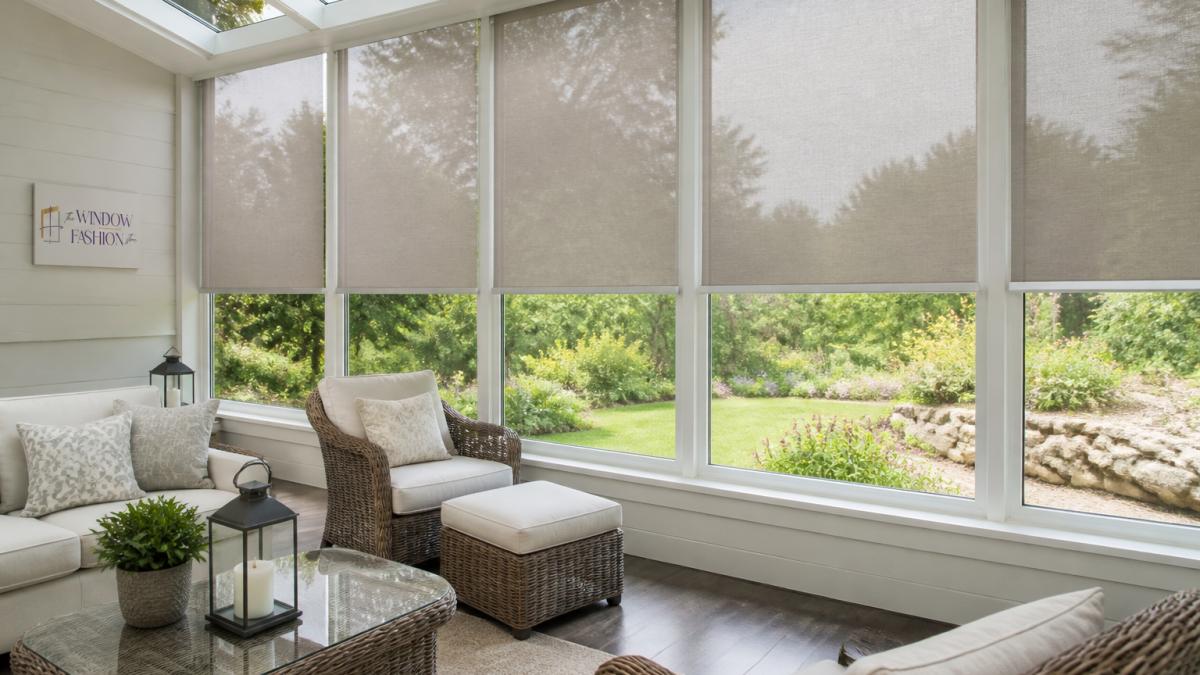
Solar shades are engineered specifically for rooms with intense sun exposure. They use a special screen weave that blocks harmful UV rays while still allowing you to see outside. The fabric contains tiny openings sized to filter light without creating a dark atmosphere. You can see out clearly during the day while gaining protection.
UV rays fade furniture, artwork, and flooring. Solar shades block up to 99% of harmful UV exposure, keeping your interior design vibrant longer. Glare on screens becomes manageable, and the sun’s heat is significantly reduced.
When choosing solar shades, look at the openness factor. A 5% openness lets in less light and provides more privacy. A 10% openness gives you brighter views. A 14% openness maximizes visibility while still filtering UV rays. The right choice depends on your sun exposure direction and how much light control you want.
Choosing Fabric for Sunroom Shades: Style Meets Function
The fabric you select determines how your shades look, perform, and age. Sunrooms are high-stress environments for window treatments, intense sun, temperature swings, and moisture all take a toll. Your fabric needs to handle that stress while matching your interior design.
Light-Filtering vs. Blackout Fabrics
Light-filtering fabrics allow diffused light to pass through while blocking direct sun and glare. They’re ideal for sunrooms because they maintain visibility to the outdoors. Blackout fabrics block nearly all light and are better suited to bedrooms. For most sunrooms, light-filtering is the better choice. Roman shades in premium fabrics add softness and sophistication.
Durability and Fade Resistance
Sunroom fabrics must resist fading. Look for materials rated for high UV exposure. Vinyl and polyester blends typically outperform natural fabrics because they’re engineered to resist color degradation. Moisture resistance matters too, if your sunroom has plants or high humidity, synthetic materials are easier to clean and more durable than natural options.
The fabric you choose affects both how long your shades last and how much maintenance they require. Durability fabrics cost more upfront but save money over time.
Measuring Windows for Custom Shades: Getting It Right
Precision measurement is the foundation of tailored shades. How you measure depends on your sunroom’s layout, window configuration, and the shade type you’ve chosen. A quarter-inch error can create gaps that defeat the purpose of the treatment.
Taking Accurate Measurements
Measure the width at three points: top, middle, and bottom. Sunroom windows aren’t always perfectly square. Measure the height at three points: left, center, and right. Record the smallest width and height, these are your inside mount dimensions. If you’re mounting outside the frame, add the overlap you want on each side, typically 1.5 to 2 inches.
For sloped or non-standard windows, measure each section separately. A sunroom with cathedral ceilings or angled glass requires treatments designed specifically for those angles. Write down the window orientation: north-facing, south-facing, east-facing, or west-facing. This helps your designer recommend the right fabric weight and opacity.
Measurement and Design Strategy
Before you measure, identify which windows are fixed panes and which are operable. Operable windows may need shades that don’t interfere with operation. Note the presence of skylights, transoms, or overhead glazing, these require different measurement approaches and often different shade types.
Identify any obstacles: muntins, window frames that aren’t square, or architectural features near the windows. These affect how the shade will fit and function. Measure the depth of your window frame to determine whether you can mount the shade inside or must mount it outside.
Professional Measurement and Consultation
A professional consultation lets you bring actual samples into your sunroom and see how they look in your specific light. A designer can assess your room’s unique characteristics and recommend not just what to measure, but how to configure your shades for maximum function and appearance. Our team at The Window Fashion Store has measured hundreds of sunroom windows and knows exactly how to account for the quirks that make each sunroom unique.
Design Ideas for Different Sunroom Layouts
Sunroom design depends heavily on how the space is oriented, how the windows are configured, and the physical characteristics of the room itself.
East- and West-Facing Sunrooms
East-facing sunrooms get warm morning light that’s not intense. West-facing rooms face brutal afternoon heat and glare that peaks between 3 and 6 p.m. For west-facing sunrooms, solar shades with lower openness factors (5-10%) are essential. They’ll dramatically reduce heat gain and protect your furniture from intense UV exposure. East-facing sunrooms can use higher openness factors (10-14%) because the morning sun is gentler.
Cathedral Ceilings and Sloped Glass
High or vaulted ceilings create dramatic light but introduce a critical challenge: how do you treat glass that isn’t vertical? Standard roller shades don’t work on angled windows because gravity pulls the shade unevenly. Sloped glass requires shades engineered specifically for the angle, with hardware that holds the shade securely without sagging.
Roman shades can be custom-fitted to follow the slope. Some homeowners use a combination of treatments: motorized shades on main vertical windows and manual shades on smaller sloped sections.
Mixed Window Shapes and Multiple Glazing Types
Many sunrooms combine different window types: large fixed panes, operable casements, French doors, skylights, and transom windows. Treating each window type identically creates visual chaos and functional gaps. Instead, group windows by function and light exposure, then choose complementary treatments that maintain a cohesive look.
A sunroom with floor-to-ceiling windows on the south wall and smaller skylights above might use solar shades on the vertical glass and cellular shades on the skylights.
Benefits of Motorized Shades for Modern Sunrooms
Motorized shades transform how you interact with your sunroom. Instead of manually raising and lowering treatments, you control them with a remote, wall switch, or smartphone app. For large sunrooms with many windows, motorization is genuinely convenient.
Motorized shades also enable automation. Program them to close automatically at sunset or open gradually as the sun rises. Some systems integrate with smart home platforms, letting you control shades alongside lighting and temperature. Modern motorized systems use battery-powered motors that last years between charges.
The main consideration is cost. Motorization adds to the price of your shades. For a small sunroom with just a few windows, manual operation might be sufficient. For a large sunroom or one with many windows in hard-to-reach places, motorization pays for itself in convenience.
Homeowners with large sunrooms, multiple windows, or those who want seamless smart home integration. Also ideal if you have mobility limitations and manual operation is difficult.
Heat Control and Energy Efficiency
A sunroom is essentially a greenhouse. Glass conducts heat efficiently, too efficiently in summer. Tailored shades for sunrooms design ideas directly impact your energy costs by managing solar heat gain.
Solar shades reduce heat gain by reflecting and filtering the sun’s energy while maintaining your view.
A north-facing sunroom rarely overheats. A south- or west-facing room can become uncomfortably warm without proper shading. In summer, closing shades during peak sun hours can reduce room temperature by 10-15 degrees, which means your air conditioning doesn’t have to work as hard. Energy efficiency translates to lower utility bills over time.
Protecting Your Sunroom Investment
Your sunroom is an expensive addition to your home. Protecting that investment means protecting the contents: furniture, artwork, flooring, and the glass itself.
UV rays fade and degrade materials. Fabrics lose color. Wood furniture becomes brittle. Artwork fades. Solar shades and UV-blocking fabrics prevent this damage by filtering harmful rays before they reach your belongings. Heat damage is equally real, sustained high temperatures can warp wood, fade paint, and stress HVAC systems.
When you invest in tailored shades for sunrooms from a manufacturer like Alta Window Fashions or Norman, you’re choosing materials engineered for durability in high-sun environments. Professional installation ensures your shades function properly and look polished. Our team at The Window Fashion Store has installed hundreds of sunroom treatments and knows exactly how to handle the unique challenges these spaces present.
The right tailored shades for sunrooms transform how you use and enjoy the space. They control light, reduce heat, protect your furniture, and add to your home’s visual appeal.
Visit our Design Gallery to see full-sized displays of Hunter Douglas, Alta Window Fashions, Norman, and Texton products. You’ll see exactly how different fabrics, colors, and styles look in real light. When you’re ready to explore options for your specific sunroom, schedule a free consultation. We’ll bring sample books to your home, measure your windows precisely, and help you choose treatments that match your vision and budget. Our team has extensive experience solving sunroom challenges, and we’re here to get it right.
Frequently Asked Questions
What type of shades are best for a sunroom?
Tailored shades designed specifically for sunrooms work best because they accommodate large glass panels, non-standard window shapes, and intense sun exposure. Solar shades reduce glare and UV rays while preserving outdoor views. Roller shades offer a clean, minimalist look, while Roman shades provide a soft, decorative aesthetic. Motorized options add convenience and precise light control. The right choice depends on your sunroom’s orientation, how much heat control you need, and your design preferences. Visit our Design Gallery to see all options in full-sized displays.
How do solar shades help control heat in a sunroom?
Solar shades for sunrooms use specialized screen-weave fabrics that block harmful UV rays and reduce solar heat gain without completely darkening the space. The openness factor of the fabric determines how much light and heat pass through. A tighter weave blocks more heat but reduces visibility, while a more open weave maintains outdoor views with lighter heat reduction.
Are tailored shades better than off-the-shelf options for sunrooms?
Yes. Tailored shades are custom-made to fit your exact window dimensions and accommodate the unique architecture of sunrooms, including sloped, angled, or oversized glass panels. Off-the-shelf options often leave light gaps and cannot address non-standard shapes. Custom shades also allow you to select specific fabrics, opacity levels, and operating systems that match your sunroom’s performance needs. Professional measurement and installation ensure perfect fit and function, protecting your furniture and artwork from fading while maintaining the aesthetic you want. We offer free in-home consultations to evaluate your specific needs.
What should I measure before ordering custom sunroom shades?
Accurate measurements are critical for tailored shades. Measure the width and height of each window opening at the top, middle, and bottom to account for any irregularities. Note whether you want inside-mount (within the frame) or outside-mount (above the frame) installation, as this affects the measurements. For sloped or angled windows, measure the depth and angle. Document any obstructions like handles or locks. We recommend scheduling a free consultation where our team can bring sample books and measure your windows precisely, ensuring your custom shades fit perfectly and function as intended.